A behind-the-scenes look at the engineering behind Ridgeline, covering the architectural decisions, Webflow integration, real-time terrain rendering, animation techniques, and performance optimizations that brought a cinematic 3D experience to life.
#tutorials
56 posts
22 Jul
9 Jul
A tutorial on how to create a minimalistic and customizable 3D wave grid background with Three.js.
7 Jul
Build a cinematic, scroll-driven 3D gallery using a camera path authored in Blender, rendered with Three.js, and animated with GSAP.
30 Jun
A step-by-step tutorial showing how to build seamless GPU-powered page transitions by combining a persistent WebGPU scene, DOM tracking, and a lightweight vanilla JavaScript router.
4 Jun
A creative exploration of GSAP MotionPath, where stacked thumbnails unfold into a flowing image strip through curved trajectories.
28 May
Most pages end when you stop scrolling. This one doesn’t. Learn how to build a seamless infinite scroll with a layered parallax depth effect.
26 May
A step-by-step guide to building a scroll-driven 3D cube gallery in Webflow with GSAP animations and CMS-powered content.
21 May
A tutorial on building cinematic scroll-driven SVG map animations with GSAP using path drawing, motion tracking, and smooth camera movement.
20 May
A creative GSAP experiment where images cascade from the mouse position and rebound off the bottom of the screen with satisfying motion.
13 May
A look at the HTML-in-Canvas proposal, how it works, and what it enables with a few practical demos.
TL;DR New “val inside parentheses” syntax is being introduced to allow for name-based destructuring. Additionally, new syntax with square brackets is being introduced for positional destructuring. Both are currently Experimental (enabled using the -Xname-based-destructuring=only-syntax compiler argument) and will become Stable in a future release. In the distant future, the behavior of the “val outside parentheses” […]
5 May
How I rebuilt Claude AI’s mascot animations from scratch, frame by frame, purely in code using SVG and GSAP.
20 Apr
Interactive Storytelling for the Web: Building Immersive Stories with Timelines, 3D, and Layered Scenes
CodropsA step by step tutorial on creating an immersive Moon story in Instorier with motion, interaction, and 3D scene building.
8 Apr
Follow along as we build page transitions in Astro with Barba.js and GSAP, from the initial setup to a working animated transition flow.
1 Apr
A step-by-step breakdown of how I built a Three.js visual explainer on dithering by animating 160,000 cubes with custom shaders.
23 Mar
Learn how to use Three.js to blend two scenes with a fluid simulation, creating a smooth, dynamic reveal effect.
18 Mar
Build a single, persistent Three.js scene in Webflow and drive smooth, GSAP-powered page transitions with Barba.js.
11 Mar
In this tutorial, we’ll create four scroll-driven transitions that reveal fullscreen images using SVG masks, GSAP, and grid- and blind-based patterns.
9 Mar
A tutorial on building a scroll-driven WebGL gallery in Three.js with depth-layered images, palette-driven backgrounds, and motion that responds to scroll velocity.
2 Mar
Learn how to build a structured scroll-driven image grid where movement unfolds progressively within a sticky layout.
26 Feb
Learn how to build a lightweight SPA router with true async crossfade page transitions using Vanilla JavaScript, GSAP, and Vite — no framework required.
24 Feb
A practical walkthrough of building a curved 3D product grid with React Three Fiber and GLSL, covering shaders, animation, and performance.
19 Feb
Build a smooth horizontal parallax gallery in DOM/CSS/JS, then upgrade it to GPU-powered WebGL (Three.js) with shaders.
17 Feb
Build a scroll-driven, infinitely looping 3D image tube in React Three Fiber powered by shaders, inertia, and a unified motion system.
10 Feb
A deep dive into building a GPU-enhanced procedural curve system in Three.js, where organic motion emerges from simple steering rules and endless Bézier paths.
2 Feb
Learn how to build a multi-page WebGL image gallery with scroll-triggered shader reveals, smooth scrolling, and seamless page transitions using GSAP, Three.js, Astro, and Barba.js.
28 Jan
Build a Three.js WebGPU scene where MSDF text dissolves with a noise-driven TSL shader while synchronized dust and spinning petal particles burst out, finished with selective bloom using MRT.
20 Jan
We’ll explore how to use GSAP’s Flip plugin to animate dynamic grid layout changes, showing how grid items can resize and rearrange fluidly.
15 Jan
Learn how to create smooth, opposing wave text animations across dual columns with scroll-driven sine wave mathematics and synchronized image updates.
7 Jan
Learn how to build an infinite, pannable image canvas with React Three Fiber. We’ll use chunk-based rendering and performance-first techniques to create a smooth, endlessly explorable image space.
5 Jan
A tutorial showing how video pixels are voxelized in 3D and dropped into a physics-driven world using Three.js, shaders, and Rapier.
22 Dec 2025
The new standard for WordPress design is interactive, animated, and intentional.
17 Dec 2025
Smooth curved animations look simple, but building them responsively takes careful control. This tutorial shows how to approach it in practice.
15 Oct 2025
Seeing a 431 Request Header Fields Too Large error message? Wondering what it means and how to fix it? This ... Read More The post 431 Error: What Is It and How to Fix It? appeared first on RoseHosting.
24 Sept 2025
In this tutorial, we are going to explain what the HTTP 426 Error is and how to fix it. It ... Read More The post HTTP 426: What is it and how to fix it? appeared first on RoseHosting.
17 Sept 2025
In this tutorial, we explain what a 424 error code is and how to resolve it. The HTTP 424 status ... Read More The post 424 Error Code: What is it and how to fix it? appeared first on RoseHosting.
27 Aug 2025
In this blog post, we will explain what the HTTP 417 Expectation Failed error is and how to fix it. ... Read More The post HTTP 417 Error Expectation Failed: What is it and how to fix it? appeared first on RoseHosting.
25 Aug 2025
In this tutorial, we will explain what the HTTP 414 error URI too long is and how to fix it. ... Read More The post HTTP 414 Error URI Too Long: What is it and how to fix it? appeared first on RoseHosting.
22 Mar 2023
Email validation is a crucial part of any web application. It ensures that the user input is valid and can be used for various purposes like registration, login, and communication. In this article, we will walk through how to validate an email address in a React application with a few different approaches. Regex The most […]
13 Feb 2023
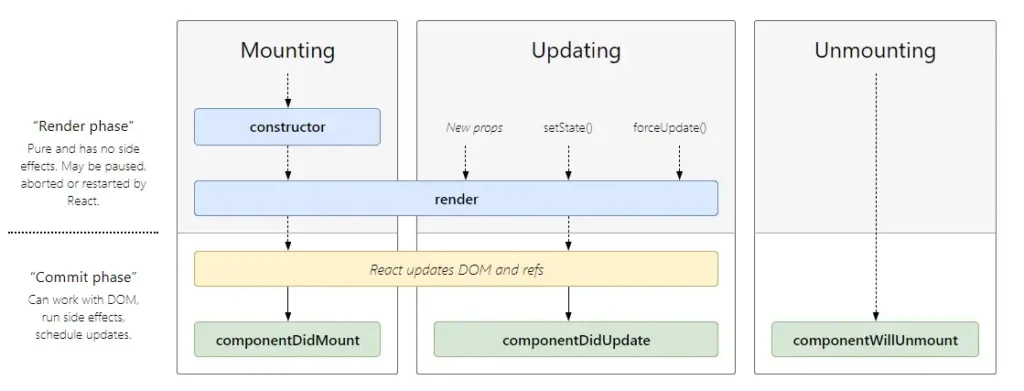
After working professionally with React for some time now, I thought it might be helpful to share some of my experience with React, especially the Re-rendering process, in the form of a Definitive Guide. In this article, I’d want to dive deeper into this topic and provide a more straightforward way of understanding how the […]
Search bars are a UI element you encounter on most websites; they help users find resources quickly through automatic suggestions. Adding a search bar to your application can drastically improve the UX by making your resources more accessible and more intuitive to search for. In this tutorial, we’ll create a simple, reusable, and customizable Search […]
27 Jan 2023
Hash routing is a technique used in Single Page Applications (SPAs) to enable navigation through different views or components without reloading the entire page. How does Hash Routing work? It works by updating the URL in the address bar with a hash symbol (#) followed by a route, also known as a hash fragment. When […]
Introduction React is a popular JavaScript library for building user interfaces used by many developers worldwide. One of the tools that can help developers build React applications more efficiently is a build tool. What is a Build tool? A build tool is a software that helps automate the process of building, testing, and deploying an […]
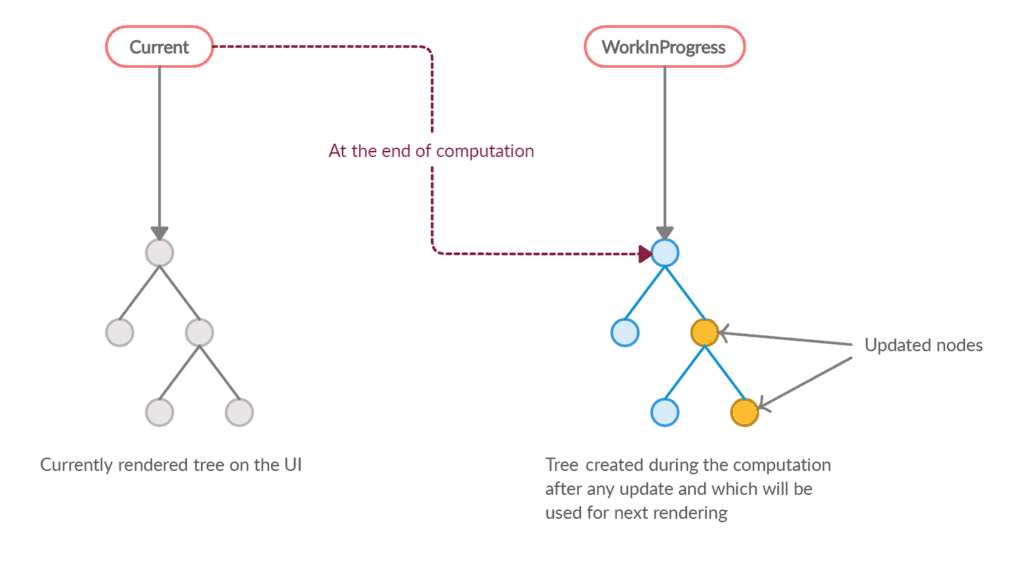
Fiber is a reconciliation algorithm used in the popular JavaScript library React to efficiently update a web application’s user interface (UI). It was introduced in version 16.0 of React in 2017 and has significantly improved the performance of React applications. What is reconciliation in React? In React, when the state of a component changes, the […]
18 Jan 2023
Error handling is a crucial aspect of software development, and it is especially important in the world of React, where components can be nested and complex. Proper error handling helps to ensure that your application remains stable and functional even when something goes wrong. In this article, we will explore some best practices for adding […]
4 Dec 2022
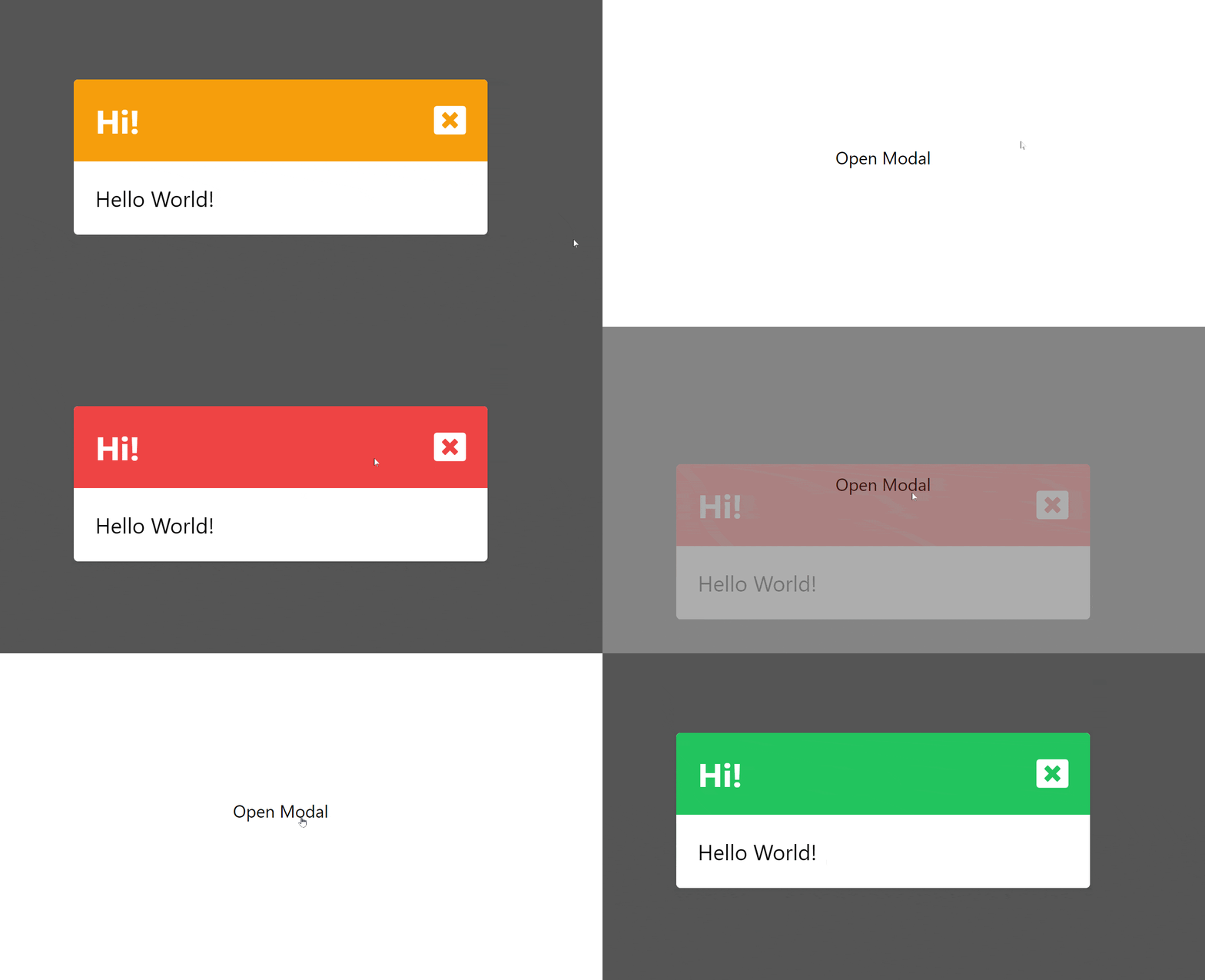
Modals are a very useful piece of UI, used to display separate pieces of information, like dialog boxes. You can implement modals very easily in React, thanks to some useful patterns, like the state hooks, and the context API. In this article, I’ll talk you through building a basic, but very extensible modal system. Here’s […]
3 Nov 2022

You may already know that, in React, we may map over a collection of items (Such as an array) using various iterator methods, such as Array.prototype.map or the trusty for loop outside JSX and generate Components or JSX Elements as we go. You can learn more about Iterators in React in this article. However, you […]
27 Oct 2022
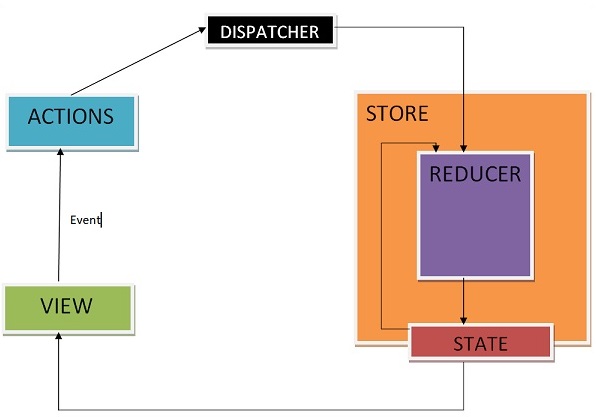
If you’ve worked on larger projects that do not already use Redux, you’ve probably encountered Prop Drilling and know how annoying and bad-looking that process is. However, if you haven’t, there is an article on the subject that you can check out here. One solution to that problem, as well as some other architectural ones, […]
17 Oct 2022

We have talked about different state management techniques in a reactJS application, to maintain the state of your application in a global store so that it can access any of the components inside the application wrapped by the provider. The techniques are Redux Context In this one, we are going to take a look at […]
ReactJS is an open-source JS library. Developers make front-end applications UI using it. React makes a developer’s life easy as it is very easy to make an interactive application with all sorts of functionality. But there is some more effort when it comes to making your end-user stick to your application and for that, the […]
13 Oct 2022
As your project continues to grow, it also begins to be harder to track and control, especially in the case of more developers joining the project. So what can you do? In order to avoid creating a messy project that’s fuelled by spaghetti code, some common conventions, methodologies, and tools shall be set up, favorably […]

Most modern web applications today use complex color palettes, style guidelines, styling patterns, as well as many other methodologies and concepts in order to provide visually-stunning user interfaces which are not only pleasant to look like but are also intuitive due to the positioning of certain UI elements and the color schemes used. However, the […]

When it comes to styling out components in React we do have plenty of choices ranging from vanilla CSS, to CSS/SCSS Modules, to even using a UI library/framework such as Bootstrap or Material UI. However, when it comes to integrating them with our React applications, something doesn’t feel right, especially when trying to conditionally style […]
If you’re new to React you might be a bit confused about the whole data flow concept that you keep hearing about when researching more about React and the way that state and props work. No worries, as in this article we’ll go over an essential part of the unidirectional data flow of React, which […]
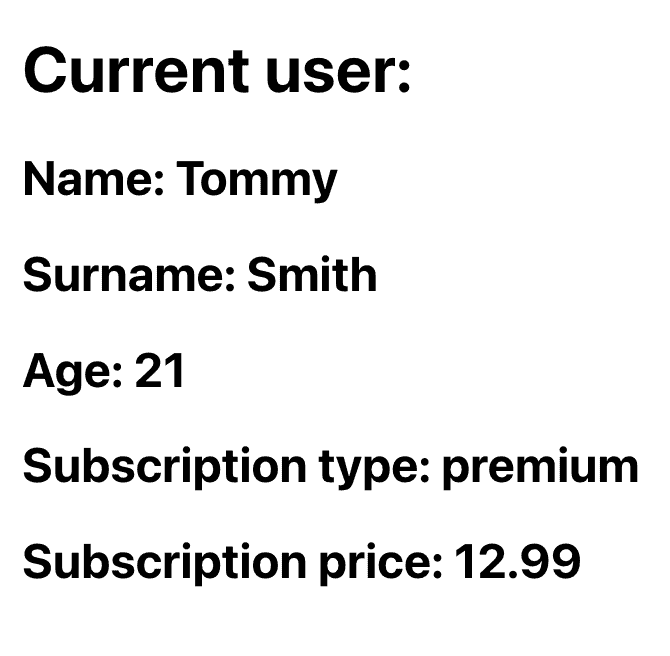
It often happens that, as a React Developer, you’re working with big data objects containing a lot of nested properties, especially those coming from an external API. Because of that, it’s not always possible for us to tell the exact shape of the object at runtime, as sometimes, due to unforeseeable issues, our objects come […]
9 Oct 2022

React Router v6 has made it possible to pass props to the components normally. Earlier, in the older version of react-router, we need to use Route’s render method to pass props to the component. In this tutorial, we will be using React Router v6, so make sure you’re using the same version. Let’s get started. […]