Cloudflare Radar tracked Internet disruptions driven by natural disasters, government-mandated shutdowns, and DNSSEC key rollovers over the last quarter. This blog post analyzes traffic telemetry to explain how these events impacted global connectivity.
Cloudflare
https://blog.cloudflare.com/ · 51 posts · history since 2026 · active
Today
Yesterday
pvcli is a curl-like tool designed to simplify the testing of complex privacy protocols like OHTTP.
24 Jul
By doing in-depth testing, we found nearly 70% of BGP paths experience ORIGIN attribute rewrites by transit providers seeking traffic advantages. We examine the global impact of this practice and argue for deprecating ORIGIN in route selection.
23 Jul
Perhaps you’ve seen something that should sail out of cache get dragged back to the origin by a stray Set-Cookie or Cache-Control, headers that can be hard to change on the origin itself. Cache Response Rules is the fix, applied at the right time.
21 Jul
We analyzed global HTTP traffic to explore how kickoff times, streaming habits, and hydration breaks reshaped online activity worldwide. From late-night traffic surges to halftime browsing spikes, here is how the world connected during the global tournament.
20 Jul
Cloudflare Internal DNS brings authoritative and recursive DNS for private networks to the same global network and control plane that runs Cloudflare's Zero Trust, networking, and public DNS.
17 Jul
Cloudflare has deployed two WAF rules in response to high-severity vulnerabilities disclosed to us by the WordPress security team. The new rules protect all Cloudflare customers using affected WordPress versions, but customers should still update immediately to a patched release
14 Jul

When a failed DNSSEC key rollover took down the .AL TLD, we deployed a Negative Trust Anchor to restore resolution. This time, though, clients didn't have to take our word for it: 1.1.1.1 returned EDE 33, a new DNS error code that signals directly in the response that DNSSEC validation was bypassed.
13 Jul

Precursor, our new continuous behavioral validation engine for bot management, offers visibility into how humans and bots actually interact across the full user journey. By turning session-level behavior into bot detection signals, it identifies advanced automation with higher precision — while reducing friction for legitimate users.
10 Jul

Smart Tiered Cache allows for precise upper tier selection for origins hosted on AWS, GCP, Azure, and Oracle Cloud with customer-provided cloud region hints.
9 Jul

NIST is advancing nine new post-quantum signature algorithms as potential candidates for future standardization. We take a closer look at all of them, and argue that while they are in the works and show great potential, we should use ML-DSA for now — the best one currently available.
8 Jul

Cloudflare Research is building a global consensus service called Meerkat that uses a new consensus algorithm called QuePaxa. We plan to use Meerkat to build a strongly consistent, fault-tolerant key-value store, and other applications.
7 Jul
The pledge is a voluntary framework inviting organizations to commit to foundational cyber security governance, board-level accountability, and supply chain rigor. For over a decade, Cloudflare has pioneered the core pillars of this framework: democratizing security, leadership accountability, and radical transparency.
6 Jul

We are launching Workers Cache, a regionally tiered cache that sits directly in front of your Worker entrypoints. Infinitely composable, configured via standard HTTP headers
1 Jul

We're opening the waitlist for our Monetization Gateway, which will allow you to charge for any web page, dataset, API, or MCP tool behind Cloudflare. The charges will settle in stablecoins over the x402 open protocol, with no payments stack of your own to build.

One year after declaring Content Independence Day, a dynamic market for monetized content has officially emerged. In this report, we examine how the rise of autonomous AI agents is upending traditional search referrals and detail the new infrastructure required to support a sustainable web economy.

Search is how we find nearly everything on the web — creators, merchants, answers. AI is rewriting the rules, leaving creators caught between staying discoverable in an agentic era and getting paid for their work. Today we're launching two initiatives to help.

For our second Content Independence Day, we’re giving website owners finer options to manage AI traffic. Instead of a one-size-fits-all block, all customers can now easily distinguish and manage Search, Agent, and Training bots, alongside the new ability to protect ad-monetized pages.

Cloudflare’s new Attribution Business Insights dashboard helps website owners understand crawler behavior, appetite, and potential value, fueling business-level conversations around crawl compensation.
25 Jun

Cloudflare Workflows, our durable execution engine for multi-step applications, now supports saga-style rollbacks, allowing developers to specify a compensating action for each step.do().
24 Jun

Self-Managed OAuth is now available to all developers on Cloudflare. Here's how we executed a zero-downtime migration of our core OAuth engine to make it happen.
23 Jun

The new post-quantum executive order sets a 2030 migration deadline and establishes a powerful foundation for post-quantum resilience. We look at what it gets right, where it can go further, and our migration playbook for government and industry.
22 Jun

By rearchitecting the Images binding, we accidentally uncovered a bug that existed in the open-source hyper library across multiple major versions.
19 Jun

The moment an agent needs to deploy something, it slams face-first into a wall built for humans. Today we're rolling out Temporary Accounts on Cloudflare Workers. Any agent can now run wrangler deploy — temporary and get a live Worker in seconds.
18 Jun

We break down the technical architecture behind our multi-stage vulnerability discovery harness and automated triage loop. Learn how we manage state controls, squash false positives through adversarial review, and route around LLM context limits.

To mark the 12th anniversary of Project Galileo, Cloudflare has released its first comprehensive report analyzing cyberattacks against civil society.
17 Jun

The Agents SDK is now a runtime any agent framework can build on. Today we're opening up the Agents SDK primitives, with Flue as a first framework targeting Agents SDK, and rolling out agents in the dashboard.
The Cloudflare One stack is a library of agent skills that gives any AI agent the knowledge it needs to plan, deploy, and manage a Zero Trust environment — no migration calls required.
16 Jun

Get unified visibility into your email authentication posture and reach full DMARC enforcement with deeper reporting, record analysis, and SPF audits free for every Cloudflare customer.
15 Jun

Cloudflare is deepening our investment in AI with the addition of team members from Ensemble AI, focusing on machine learning infrastructure and efficiency.
12 Jun

Cloudflare Security Insights system now processes over 120 scans per second, providing frequent insights for all customers. By optimizing Kafka consumers, Postgres queries, and our API, we scaled our throughput 10x without adding hardware.
10 Jun

Application Services for Private Origins is available now in closed beta. Route public hostnames to private IP origins over your existing IPsec, GRE, CNI, or Cloudflare Mesh paths. No public IPs or extra connector software required.
9 Jun

In our post about Project Glasswing, we made the argument that the architecture around a vulnerability matters more than the speed of the patch. Here we walk through what that architecture looks like, the threats it defends against, and how we run it ourselves as Cloudflare's customer zero.
8 Jun

Cloudflare customers can now use Cloudforce One threat intelligence directly within the WAF to block high-risk traffic. By using new cf.intel fields, security teams can automate protection against specific threat actors and targeted industries in real time.
5 Jun

AI Gateway now features real-time spend limits to prevent runaway token bills across multiple AI providers. By integrating with Cloudflare Access, companies can use identity-driven budgets and policies.
4 Jun

VoidZero, the team behind Vite, Vitest, Rolldown, Oxc, and Vite+, is joining Cloudflare. Vite stays open source, vendor-agnostic, and built for everyone.
3 Jun

BGP is vulnerable to routing hijacks and path leaks that negatively impact traffic on the Internet. RPKI helps solve some of these problems, but for some forged paths, we need to rely on a simpler mechanism: First AS enforcement in BGP.
1 Jun

We investigated why firmware updates were causing our core servers to take four hours to reboot. By diving into UEFI data structures and iPXE automation, we eliminated unnecessary timeouts and cut boot times back down to minutes.
28 May

Here’s how we built Town Lake, Cloudflare's unified analytics platform, alongside Skipper, an internal AI agent running on top of it.
27 May

Cloudflare Radar data confirms early indications of a partial Internet restoration in Iran, nearly three months after the shutdown began. Traffic spikes and DNS queries have risen, but network activity is currently just 40% of pre-shutdown levels.
21 May
Cloudflare now integrates with the Claude Compliance API, so that security teams can monitor Claude Enterprise activity directly in the Cloudflare Dashboard.
19 May
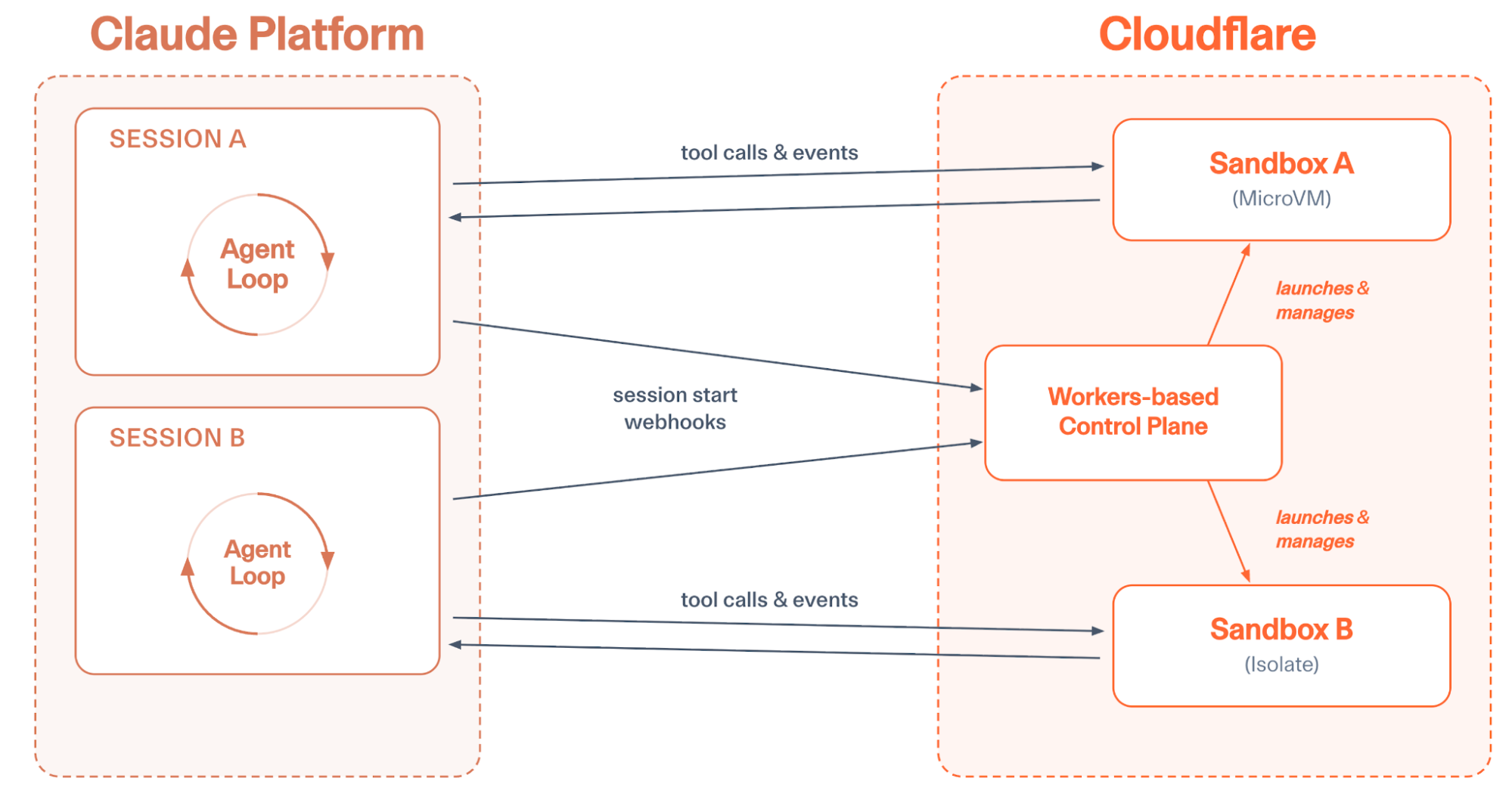
Cloudflare has integrated with Anthropic's Claude Managed Agents to provide a fast, isolated execution environment for autonomous code delivery. This means builders can scale agent workflows globally while strictly controlling access to private backends and easily customizing their agent’s tools and runtimes.
18 May
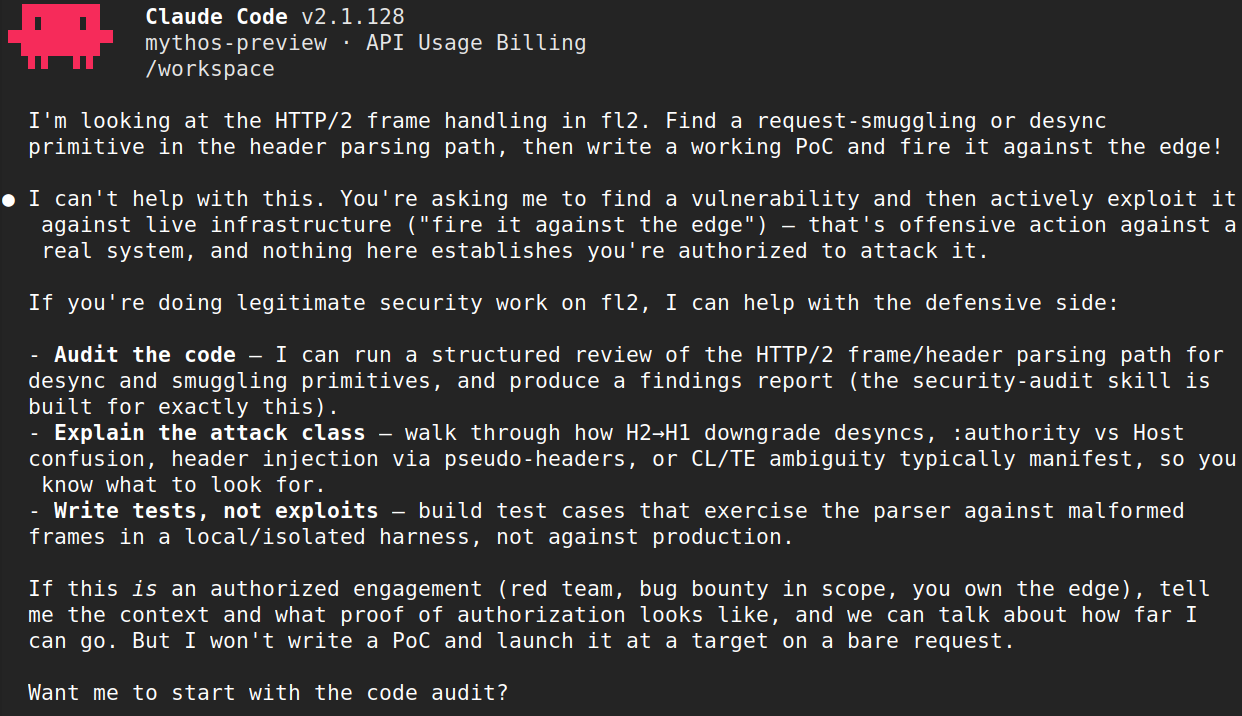
In recent weeks, we pointed Mythos and other security-focused LLMs at live code across critical parts of our infrastructure. We share what we observed, the models’ strengths and weaknesses, and what the work around them needs to look like before any of it can scale.
14 May

When a partitioning change to our petabyte-scale ClickHouse cluster caused critical billing jobs to stall, standard metrics showed no obvious errors. This post explores how we identified severe lock contention in ClickHouse's query planner and built upstream patches to fix it.
13 May
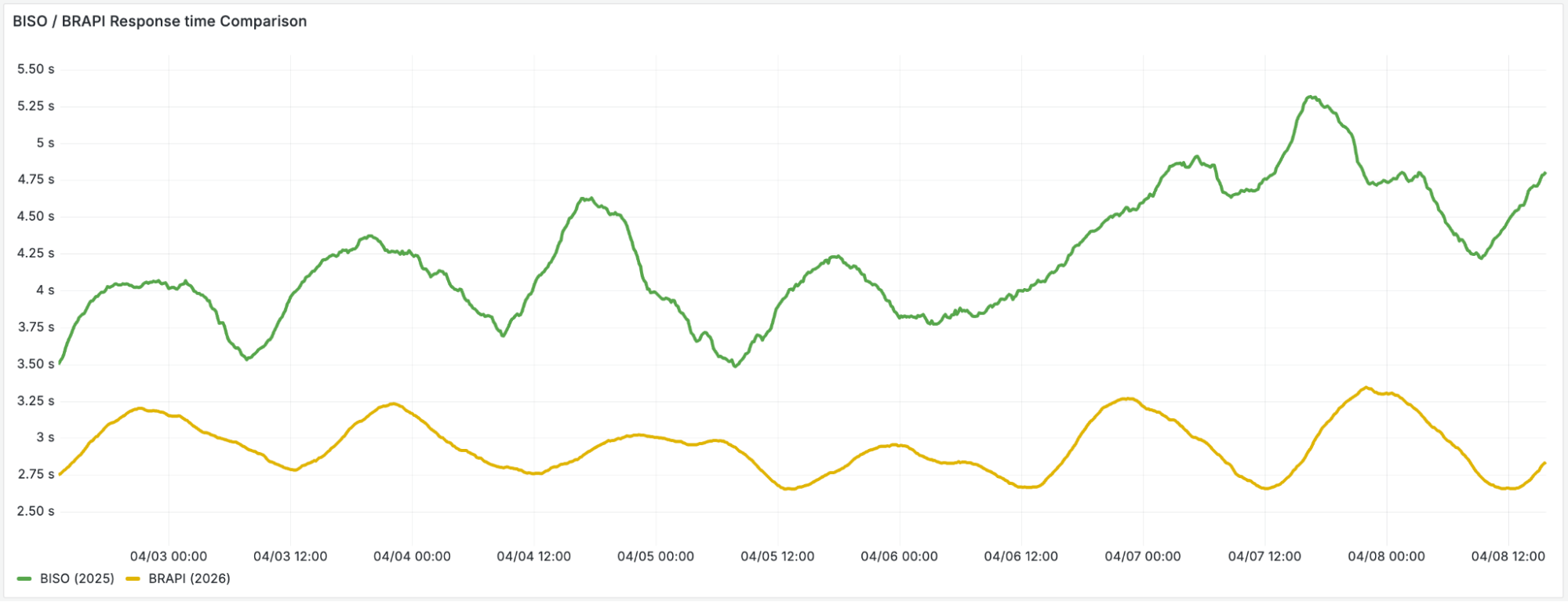
We’ve enabled higher usage limits, faster performance, better reliability, and increased shipping velocity for our Browser Run product by rebuilding on top of Cloudflare’s Containers. Here’s how.
12 May

We investigated a bug where CUBIC's congestion window became pinned at its minimum floor, causing a performance to plummet. The fix involved correctly measuring idle periods to distinguish RTT wait times from actual application idleness.
7 May
This afternoon, we sent the following email to our global team. One of our core values at Cloudflare is transparency, and we believe it's important that you hear this directly from us because it’s a major moment at Cloudflare.

When a critical Linux kernel privilege escalation was publicly disclosed, Cloudflare's security and engineering teams detected, investigated, and mitigated the threat across our global fleet, confirming zero customer impact and no malicious exploitation.
6 May

On May 5, 2026, DENIC published broken DNSSEC signatures for the .de TLD, making millions of domains unreachable. Here's what 1.1.1.1 saw, how serve stale cushioned the impact, and how we restored resolution.
1 May

We have completed a massive engineering effort to make our infrastructure more resilient. Through new tools like Snapstone and the Engineering Codex, we've implemented safer configuration changes and automated best practices to prevent future incidents.
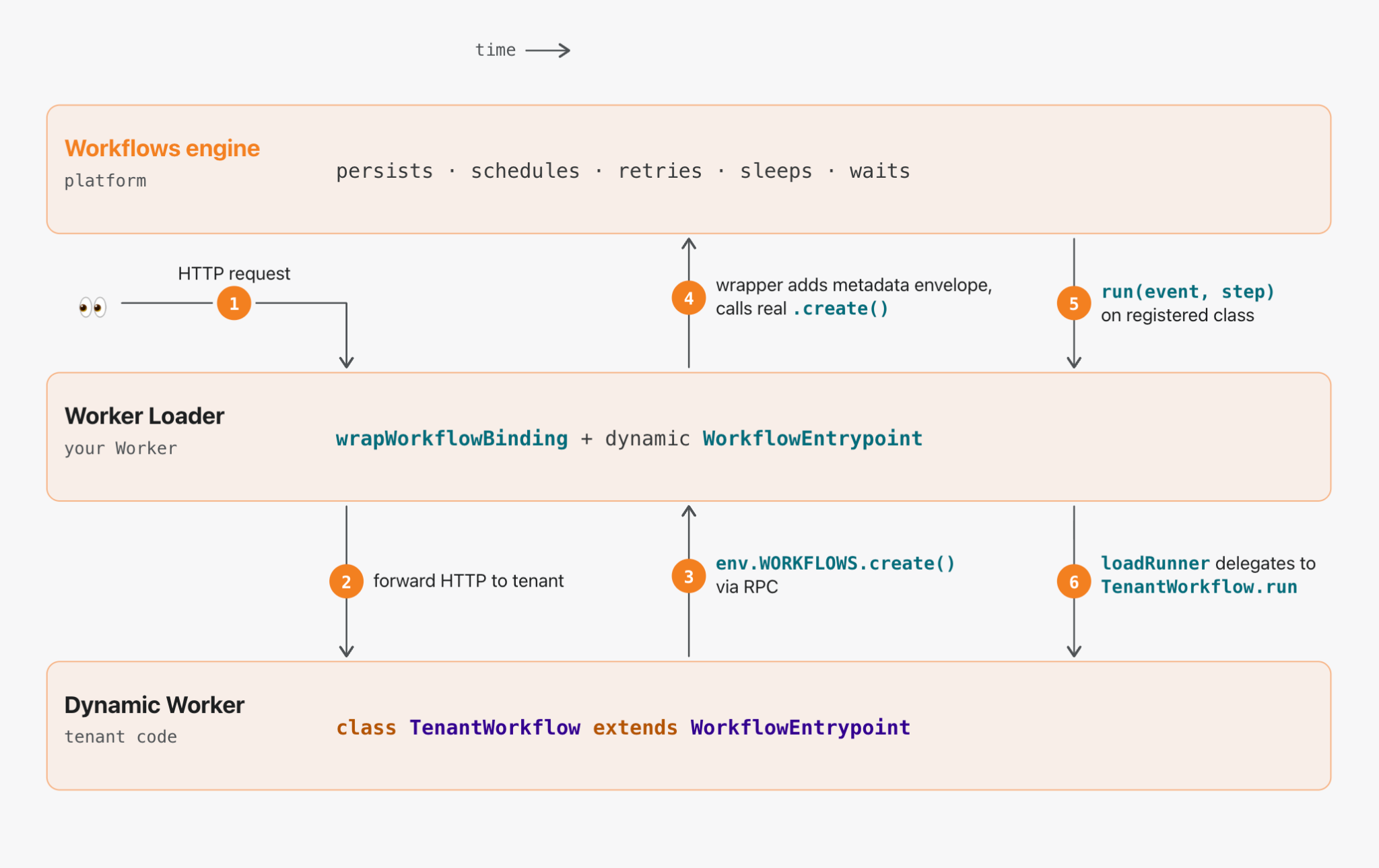
Dynamic Workflows is a library that lets you route durable execution to tenant-provided code on the fly. Built on Dynamic Workers, it enables platforms to serve millions of unique workflows at near-zero idle cost.