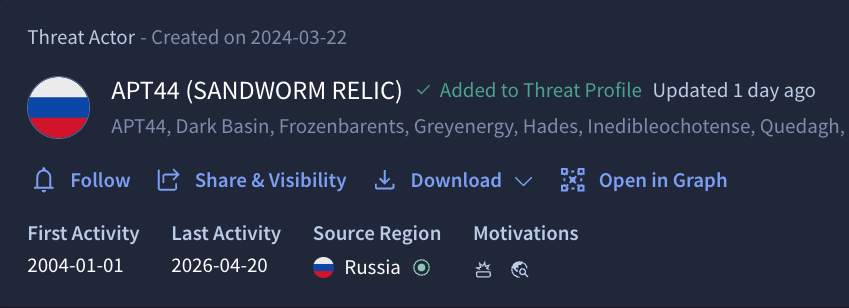
Introduction Today, Google Threat Intelligence Group (GTIG) will begin rolling out a unified naming schema for tracking threat actors. This new naming taxonomy represents an effort to standardize tracking across platforms and public reporting. Why are we Adopting a Different Naming System? Historically, Mandiant and Google’s Threat Analysis Group (TAG) maintained distinct tracking systems, relying on parallel naming schemas that…
#threat intelligence
15 posts
24 Jul
16 Jul
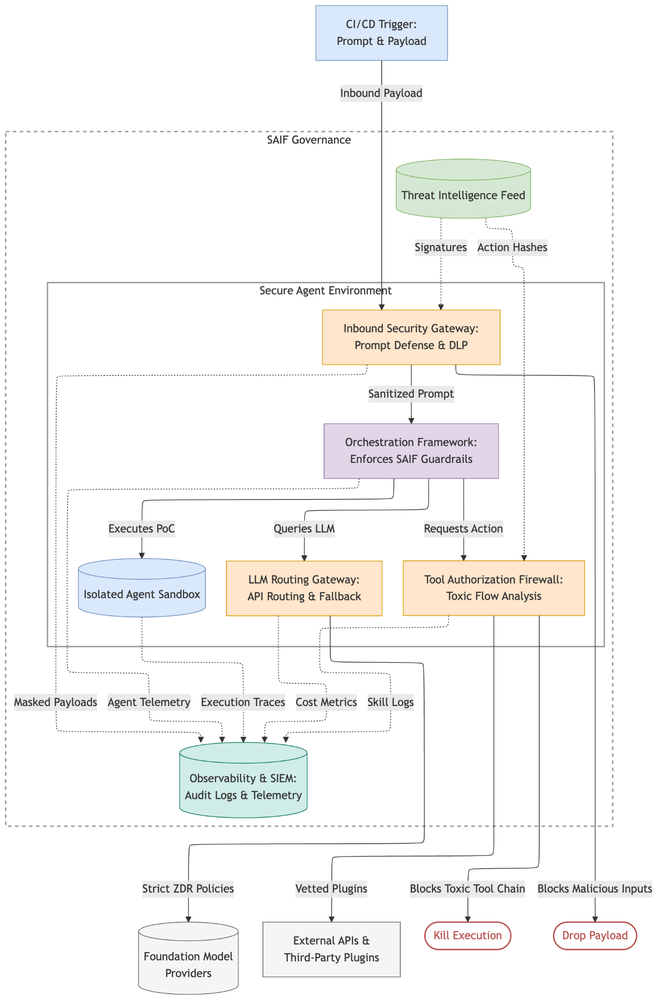
Written by: Jules Czarniak Introduction As highlighted in the Mandiant M-Trends 2026 report, the mean time-to-exploit (TTE) has dropped to -7 days, meaning vulnerabilities are often exploited a week before a patch even exists. To keep pace, many security teams are exploring how to integrate large language model (LLM) agents into their codebases, development environments and continuous integration and continuous…
15 Jul
Written by: Corné de Jong Introduction Mandiant security assessments frequently identify publicly exposed serverless applications that lack authentication, often as a result of specific business requirements. Serverless deployments typically run custom-developed code that incorporates third-party packages, making them targets for a wide range of application-level attacks, including: Local and Remote File Inclusion (LFI/RFI) Command Injection Successful exploitation of these vulnerabilities…
7 Jul
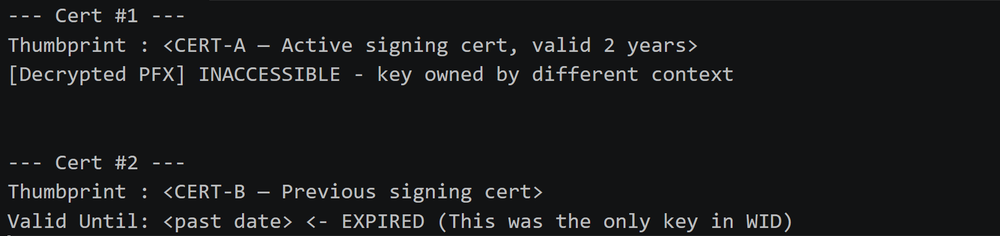
Written by: Shebin Mathew Introduction The "Golden SAML" technique, first described by CyberArk researchers in 2017, and further detailed by Mandiant researchers in 2021, remains one of the most effective methods for threat actors to forge identity assertions in the Microsoft ecosystem. By obtaining the private key of an ADFS token-signing certificate, an attacker can authenticate as any user to…
2 Jul
Background Today, in coordination with the FBI, Lumen, and others, Google took action against the NetNut residential proxy network, also known as Popa. This action builds on our disruption of the IPIDEA proxy network that took place in January 2026, and is a continuation of Google’s objective to dismantle malicious residential proxy networks. Actions Taken As a part of this…
29 Jun

The Bear Necessities: A Look at the Drivers, Dynamics, and Applications of the Pro-Russia Influence Ecosystem
Google CloudWritten by: James Sadowski, Alden Wahlstrom Introduction Four years into Russia’s full-scale invasion of Ukraine, the pro-Russia influence ecosystem has evolved from a tool of war back into a global strategic asset. Since the mobilization of this ecosystem to support frontline objectives, we have witnessed the expedited development of new influence assets linked to multiple, expansive, covert information operations (IO)…
25 Jun

Written by: Jordan Jones Introduction Google Threat Intelligence Group (GTIG) has conducted an in-depth analysis of a .NET backdoor, tracked as STOCKSTAY, that has been continually developed and deployed by the Russia-linked threat actor Turla (aka SUMMIT, Secret Blizzard, VENOMOUS BEAR, UAC-0194) since at least December 2022. Turla has deployed STOCKSTAY against government and military organizations in Ukraine, as well…
24 Jun
Zero-Day Exploitation of Vulnerability (CVE-2026-20245) in Cisco Catalyst SD-WAN Manager
Google CloudWritten by: Chester Sng, Pete Boonyakarn, Logeswaran Nadarajan Introduction In early 2026, Mandiant identified a threat actor targeting SD-WAN infrastructure at a service provider. After gaining initial access, the threat actor exploited a zero-day vulnerability (CVE-2026-20245) in Cisco Catalyst SD-WAN to escalate privileges from a compromised administrative account to root-level access. The vulnerability stems from the device’s file upload feature…
15 Jun

Public and Private Medical Community Targeted by China-Nexus Threat Actor Pursuing Artificial Intelligence, Cyber, Medical, and National Defense Research
Google CloudWritten by: Patrick Whitsell, John McGuiness Google Threat Intelligence Group (GTIG) has identified a sophisticated campaign attributed to UNC6508, a People's Republic of China (PRC)-nexus threat actor, targeting institutions in the North American academic, medical, and military research community. While remaining undetected for over a year, the threat actor compromised externally facing web applications, deployed bespoke malware, pivoted to sensitive…
11 Jun

Introduction Mandiant and Google Threat Intelligence Group (GTIG) have identified an active compromise and extortion campaign attributed to UNC6240 (ShinyHunters) targeting Oracle PeopleSoft application infrastructure. The activity was observed between May 27, 2026, and June 9, 2026 and is consistent with the exploitation of CVE-2026-35273, a critical remote code execution vulnerability (CVSS 9.8) in the Environment Management component. The exploitation…
9 Jun

In our post about Project Glasswing, we made the argument that the architecture around a vulnerability matters more than the speed of the patch. Here we walk through what that architecture looks like, the threats it defends against, and how we run it ourselves as Cloudflare's customer zero.
8 Jun

Cloudflare customers can now use Cloudforce One threat intelligence directly within the WAF to block high-risk traffic. By using new cf.intel fields, security teams can automate protection against specific threat actors and targeted industries in real time.
5 Jun

Written by: Chad Reams, Tufail Ahmed, Keith Knapp, Ashley Frazer, Tyler McLellan Introduction From January through May 2026, Mandiant identified a financially motivated data theft extortion campaign executed by the threat cluster UNC3753 (also tracked as "Luna Moth," “Chatty Spider,” and "Silent Ransom Group") targeting dozens of organizations across professional, legal, and financial services in the United States. UNC3753 leverages…
18 May
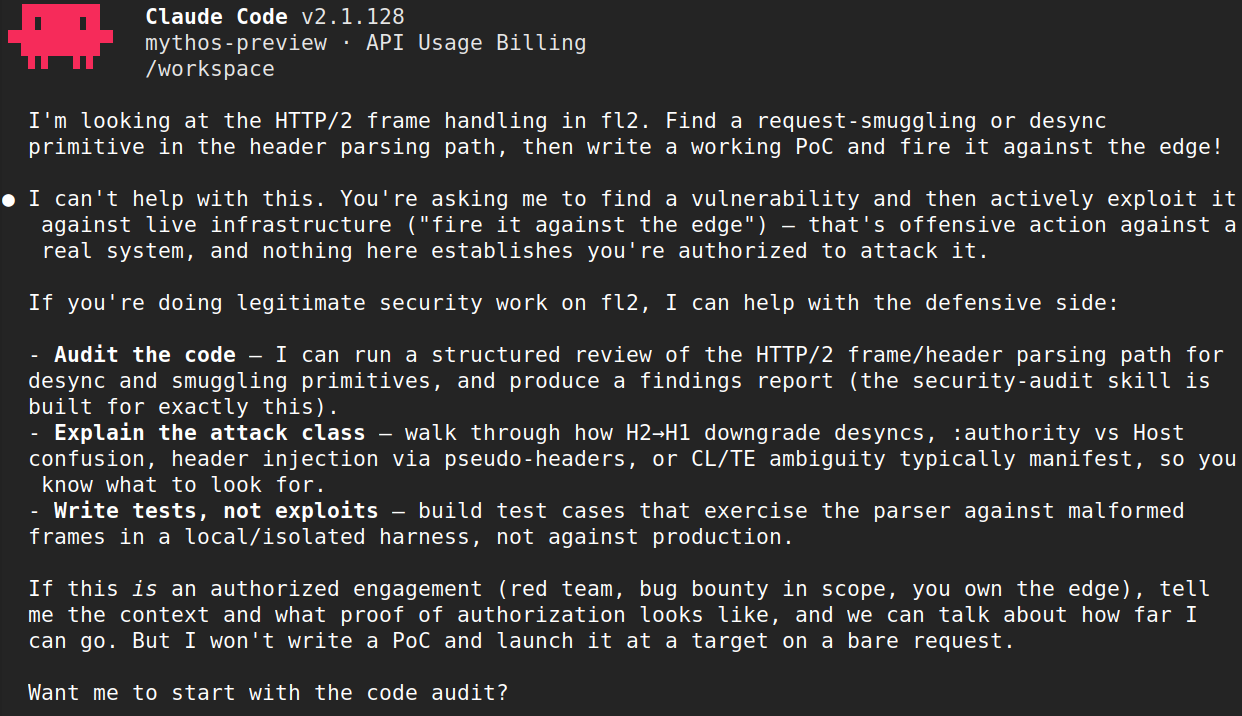
In recent weeks, we pointed Mythos and other security-focused LLMs at live code across critical parts of our infrastructure. We share what we observed, the models’ strengths and weaknesses, and what the work around them needs to look like before any of it can scale.
17 Nov 2020
(Editor’s note: This proposed solution to identifying hidden malware was first presented at Black Hat USA 2020 and is featured in the newly published report, The Modern Cybersecurity Landscape: Scaling for Threats in Motion. Download your copy here.) As malware and spam become more automated and complex, cybersecurity professionals need new tricks to spot the malware and […] The post…