How we chose Roborazzi for fast, easy, and high-fidelity screenshot tests of our Android apps, without needing to run them on an emulator. As mentioned in our earlier blog post , screenshot tests are a fundamental part of our testing pyramid at Thumbtack. They validate that our UI code renders correctly. They catch UI regressions as our code evolves. They…
#android-app-development
7 posts
31 Mar
12 Feb 2024

In today’s competitive world of Mobile app development, it’s essential to create apps that are not only feature-rich but also lightweight. Studies show that for every 6MB increase in the app size, there’s a decrease in install conversion rate by 1%. Therefore, with the increasing demand for faster downloads and better user experiences, app size has become crucial to increase…
19 Dec 2023

Crash Course on the Android UI Layer | Part 2 State Holders and Saving State This blog post series aims to summarise the Android Developer guidance on the UI layer . We’ll explore all the entities involved in it, understand the role each part plays, and discuss best practices. By the end of this series, you will have a general…
1 Feb 2023
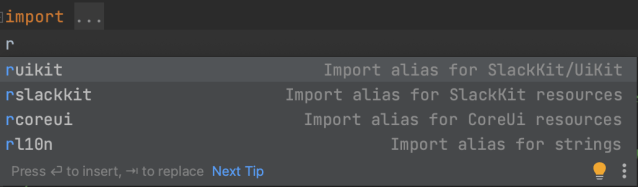
After Duplo modularization, we noticed that the task producing a transitive R class was taking a significant amount of time to execute. To eliminate this task altogether, and since the non-transitive R class is advertised to have up to 40% incremental build time improvement, we decided to migrate our codebase to use it. If you’re not…
4 May 2022
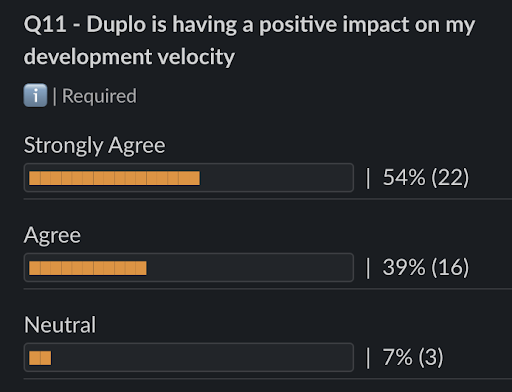
In the first two posts about the Duplo initiative, we described why we decided to revamp our mobile codebases, the initial phase to clean up tech debt, and our efforts to modularize our iOS and Android codebases (post 1, post 2). In this final post, we will discuss the last theme of the Duplo initiative,…
28 Mar 2022
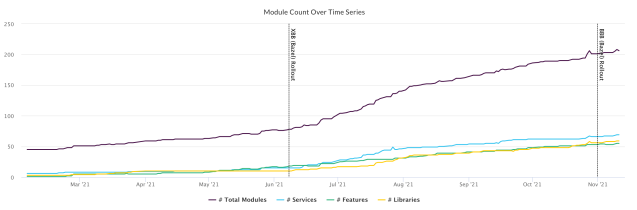
In the first post about the Duplo initiative, we discussed the reasons for launching a project to revamp Slack’s mobile codebases, and what we accomplished in Duplo’s initial Stabilization phase. This post will explore modularization, and then there will be a third post to describe how we modernized our codebase and the overall results of…
12 Jan 2022

When do you need to overhaul a large code base to address tech debt? What is the best way to address widespread inconsistencies and outdated patterns? How can you make significant architectural improvements to a complex application while still continuing to ship features? These were questions we grappled with at the beginning of 2020, when…