
Tracking tests on non-default branches was one of the most requested capabilities during the Bitbucket Tests (beta). We heard you, and today, we’re shipping it. Most teams don’t ship from main. Integration happens on develop, stabilisation on staging, releases cut from release. Until now, Bitbucket Tests only tracked the tests from default(main) branch, leaving the […] The post Bitbucket Tests…
#bitbucket
11 posts
22 Jul
21 Jul
We launched Bitbucket Packages to give teams one place to manage code, pipelines, and artifacts, and we’ve been expanding it ever since, first with Maven and npm, then PyPI and NuGet. Every one of those packages has shared one trait: it lives inside a single repository and inherits that repository’s permissions. Most of the time, […] The post Share packages…

You shouldn’t have to grant full repository admin rights just to let an engineer or release manager trigger a deployment. To solve the all-or-nothing access problem, Bitbucket Pipelines introduces custom deployment permissions (Beta). You can now gate specific environments to authorized users and groups, ensuring safer releases and easier compliance. Left: Add users and groups […] The post Custom deployment…
29 Jun
Earlier this year, we introduced the beta version of the Bamboo to Bitbucket Pipelines migration tool. Since then, we’ve listened closely to your feedback and expanded its capabilities to make your transition to the cloud smoother. We are thrilled to announce the general availability (GA) version of the Bamboo to Pipelines migration tool. The tool […] The post Bamboo to…
25 Jun
If your team bIf your team builds with Python or .NET, your packages have likely lived separately from your code, stored in a registry with distinct login, permissions, and billing. Starting today, they don’t have to. Bitbucket Packages now supports the Python Package Index (PyPI) and NuGet, integrating Python and .NET package management into the […] The post Bitbucket Packages…
24 Jun
When we introduced native Pipelines authentication for Bitbucket Packages, we made it easier to publish artifacts from CI/CD without relying on personal credentials. Now we’re extending that integration further: package artifacts published through the Pipelines integration can display a Source Pipeline, making it easy to trace an artifact back to the pipeline run that created […] The post Trace packages…
In November 2025, we introduced new triggers and workflows to Bitbucket Pipelines to help teams manage and scale complex CI/CD workflows. We later extended that foundation with additional event-based triggers for pipeline, deployment, and pull request events. We’re now extending that model with a new package-artifact-created trigger. This trigger lets you automatically run custom pipelines […] The post Introducing Package…
16 Jun
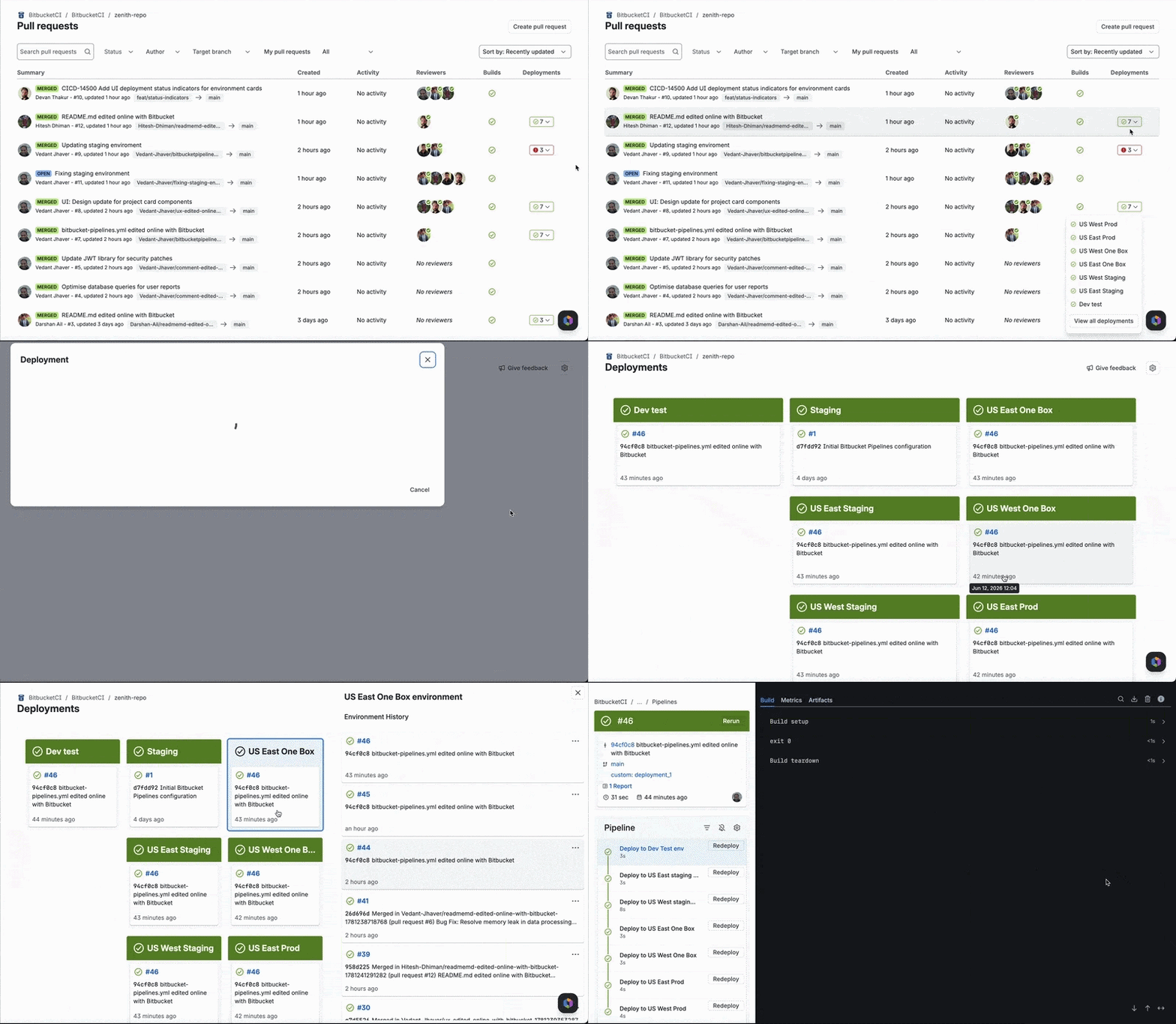
You shouldn’t have to leave your PR list to know where your code is deployed. Yet, developers constantly lose time context-switching just to see if a change hit staging or production. To solve this, we are launching the Beta version of Deployment Status Tracking for your PRs. This feature surfaces live deployment statuses directly within […] The post Track Deployment…
3 Jun

In December, we shared our plans to introduce pricing for self-hosted runners. You told us loud and clear that a free option matters. Today, as Premium Runners become generally available, we are happy to share that we will continue to have a free forever tier, which lets you connect up to 100 self-hosted runners as […] The post Premium self-hosted…
19 May
Last month, we introduced Agentic Pipelines, a new way to orchestrate AI agents to automatically, and routinely, handle the repetitive engineering chores so you can get back to solving the fun, cool problems. When we launched, Agentic Pipelines supported Atlassian’s developer AI agent, Rovo Dev. Today, we’re opening up Agentic Pipelines to even more teams: […] The post Agentic Pipelines…
29 Apr
At Atlassian, we use Merge Queues to ship frequent changes with confidence and streamline pull request merges. Across some of our busiest codebases, Merge Queues have sharply reduced incident frequency and turned merging from a stressful bottleneck into a background task. Today, most of our largest repositories rely on Merge Queues—over 70 large repos across […] The post Inside Atlassian’s…