We are living in the golden age of the weekend AI side project. Thanks to agentic engineering and LLMs, the time to go from a blank IDE to a functional local application has dropped from quarters to hours. You can build your wildest ideas over a cup of coffee. But inside an enterprise ecosystem with rigid infrastructure and millions of…
#developers practitioners
27 posts
21 Jul

In Google Cloud, Identity and Access Management (IAM) helps you maintain access control over your cloud resources and operations. While it includes other features, this is its primary purpose. If you ever tried to harden security over your application, you know the importance of the Principle of Least Privilege (PoLP) ‒ grant the absolute minimum permissions to your users and…
17 Jul

Earlier this year, we introduced Gemini Enterprise Agent Platform, where you can build, scale, govern, and optimize agents. Today, we’re sharing 13 demos that walk you through what Agent Platform can do. Each one teaches a concept, a pattern, or an architecture you can put to work immediately. The best part? You don't have to follow them step-by-step. Install Agents…
Optimizing token consumption is key to keeping AI coding assistants fast and accurate. You might not be writing every line of code any more, but now you’re responsible for directing those coding assistants to focus on getting the most out of each token. Context bloat increases latency and causes models to forget instructions or hallucinate, it also costs money and…
16 Jul
Can teams of AI agents collaborate to create a short film? As part of an internal Google generative media hackathon, we put this question to the test – specifically, to uncover whether AI agents could work collaboratively in a domain less innately familiar than software development. We gave each crew three agents with distinct roles and had them collaborate through…

Artificial intelligence is moving from prototype to production faster than traditional security paradigms can adapt. For CISOs and platform engineering teams, the challenge is clear: you need to protect proprietary model weights, defend against novel application-layer threats like prompt injection, and enforce strict regulatory compliance—all without slowing down your AI developers. To meet all of these security goals, you need…
9 Jul

Here’s a question we hear often at Google Cloud: How do you safely run AI-generated code or untrusted binaries without putting your host application, data, and cloud credentials at risk? In other words, how do you give AI-written programs a safe space to run — one that keeps them completely separate from your trusted programs with higher privileges? Until now,…

Google Kubernetes Engine (GKE) managed DRANET supports both GPUs and TPUs. There are several configurations to use this implementation, including standard cluster (where you have full control) and autopilot cluster (where Google does the heavy configs for you). I've been exploring the capabilities and in this blog we will explore setting up for autopilot clusters. Autopilot and managed DRANET GKE…
7 Jul
A developer's guide to publishing agents in Gemini Enterprise and Google Cloud Marketplace
Google CloudSoftware-as-a-service (SaaS) is evolving into Agents-as-a-service (AaaS). Instead of isolated applications, developers are creating AI agents that interoperate using standardized open protocols such as the Agent2Agent (A2A) protocol and can be orchestrated through centralized agent platforms like Gemini Enterprise Agent Platform. When building for your specific use case, we believe the goal should always be to engineer high-quality agents that…
When we first made BGP route policies for Cloud Router generally available over a year ago, our goal was to give network administrators deep, programmable control over how network paths are evaluated and propagated. Since then, we’ve been watching closely how our customers have adopted this feature. We've seen network engineering teams build incredibly sophisticated, resilient routing architectures that were…

Moving Beyond the Prototype The AI landscape has shifted. While "vibe coding" with tools like Antigravity and AI Studio lets you build and deploy complex agents in minutes, the real work begins on "Day 2". Moving from a magical prototype to a hardened, production-grade application requires professional AI engineering. We’re excited to bring back the Accelerate AI with Cloud Run…
1 Jul

Anthropic's agentic coding tool Claude Code has worked with Google Cloud for a while now. An individual developer could easily point CLAUDE_CODE_USE_VERTEX=1 at a Google Cloud (GCP) project, grant the role roles/aiplatform.user, and inference stays inside your Google Cloud perimeter. That flow works great when it’s just you, or a handful of engineers. But rolling it out across an organization…
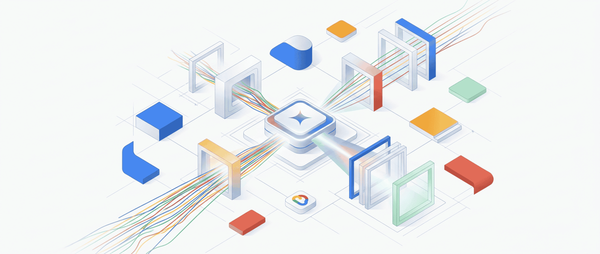
Beyond Static Prompts: Building Scale-Proof, Polymorphic Multi-Agent Systems with Google's ADK
Google CloudAs enterprise generative AI transitions from simple, conversational chatbots to autonomous multi-agent workflows, developers face a critical bottleneck: scale. In a production environment, an enterprise agent often needs to navigate hundreds of heterogeneous data structures, dynamic business rules, and shifting API schemas. The standard blueprint relies on "Static Prompting"—pre-loading all potential JSON schemas, Pydantic classes, or tool definitions directly into…
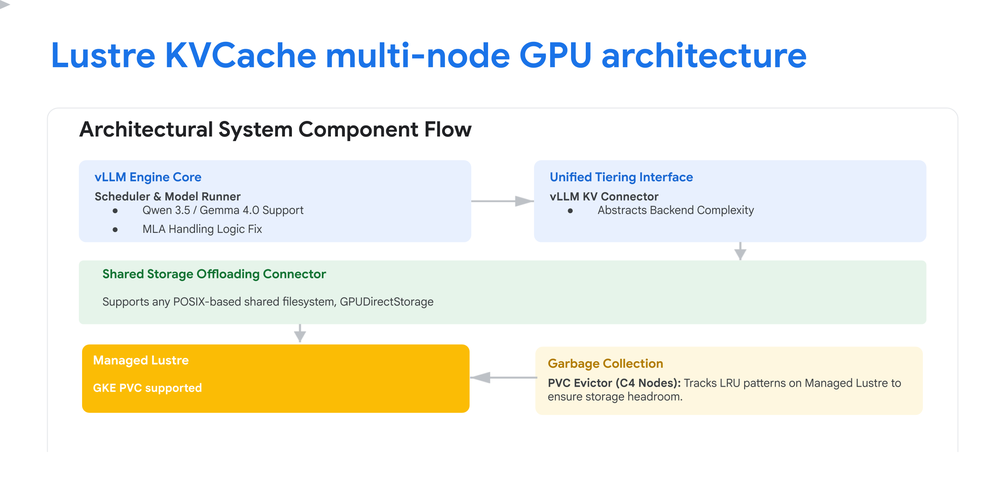
Significant contributors to this article include Sneha Aradhey, Software Engineer, Google Kubernetes Engine, and Michael MacDonald, Sr Software Engineer, Google Cloud Managed Lustre. Enterprise production environments are shifting to distributed, multi-node architectures to serve long-context window lengths and agentic AI. As these workloads scale, KVCaches often outgrow local CPU RAM and host SSD cache tiers. To handle this, some setups…
30 Jun
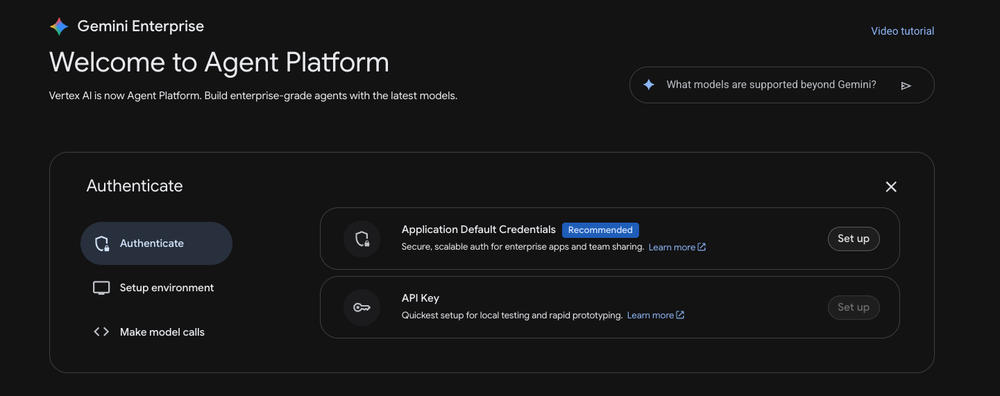
Build agents even faster with Gemini Enterprise Agent Platform’s fully-managed, remote MCP server
Google CloudA couple of months ago, we announced that over 50 Google-managed MCP servers are available. Today, we’ll dive into how to use the Gemini Enterprise Agent Platform remote MCP server to securely connect your external AI agents to the resources inside your Google Cloud environment. Connect your IDE to Google Cloud Think of the Agent Platform MCP server as a…
22 Jun

You've got a working prototype in Google AI Studio. A React frontend, a Node.js backend, maybe a database. Now you want a live URL to share with your team, your users, or a friend who wants to try it. Google Cloud gives you a full platform for deploying production applications, with fine-grained IAM controls, billing management, and region selection. That's…
18 Jun

Scaling the Next Generation of Global Innovation: How Google Supports Top Startups Around the World
Google CloudIn the high-stakes world of tech entrepreneurship, the leap from a brilliant prototype to a scalable, market-defining business can be brutal. Founders need much more than capital; they need deep architectural guidance, sovereign-level policy alignment, and technical systems engineered to enable rapid growth. Joy’s Law states: "[N]o matter who you are, most of the smartest people work for someone else."…
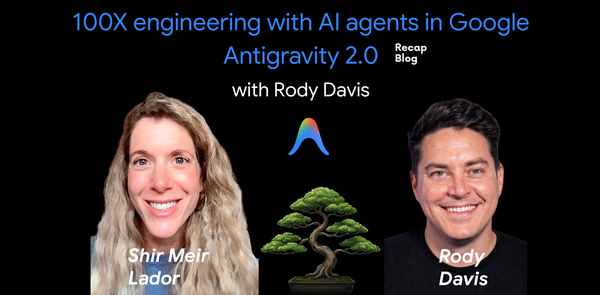
In this episode of the Agent Factory, I sat down with Rody Davis, one of Google’s top agentic engineers. We dive into the massive shift from traditional IDEs to agent-first platforms, the reality of code reviews in an AI-driven world, and how to use "skills" to perform at a 100X level. This post guides you through the key ideas from…
17 Jun
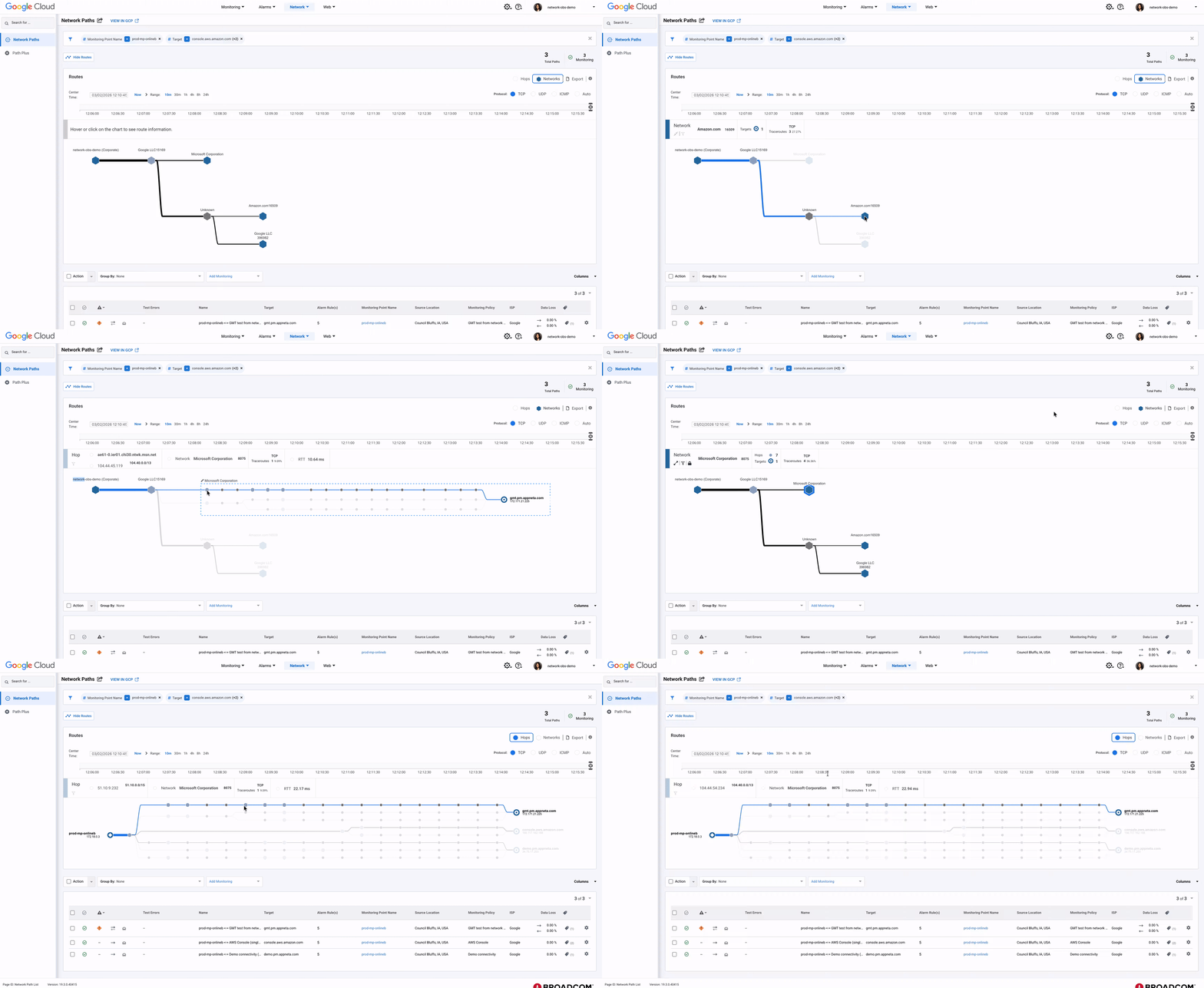
In today’s digital landscape, the network is no longer confined to a single data center or even a single cloud provider. Enterprises are increasingly adopting cross-cloud strategies, connecting Google Cloud workloads to on-premises environments, other clouds like AWS and Azure, and a vast array of internet-facing applications. While this flexibility drives innovation, it can also introduce significant operational complexity. When…

Build and Deploy a Remote MCP Server to GKE in 30 Minutes Integrating context from tools and data sources into LLMs can be challenging, which impacts the ease of development for AI agents. To address this challenge, Anthropic introduced the Model Context Protocol (MCP), which standardizes how applications provide context to these models. Developers often want to build an MCP…
16 Jun

At Google Cloud, we believe that the best products are built in partnership with our customers. Their feedback and real-world experiences are invaluable in helping refine our services and deliver solutions that truly meet our customers’ needs. In January 2026, our Google Cloud Developer Advocacy team participated in a high-velocity technical sprint with a major Google Cloud customer and a…
15 Jun

I have been exploring how to reclaim my software stack from NPM dependency overhead and replace my resource-intensive Node.js runtime with a compiled, single-binary Go CLI. The result of my efforts is skl, a fast tool we use for managing Agent Skills, that launches in 2ms and uses only 11MB of memory. But how exactly did I do it? Simply,…
11 Jun

Look at any builder's prompt history and you'll see a collection of highly specific, sometimes chaotic, one-off prompts. We use AI to debug a single error message, refactor a messy email, or generate a quick boilerplate. If you sit down with people who consistently ship high-quality work, you'll find something interesting. They aren't just improvising. They have a set of…
10 Jun

Choosing your surface: Antigravity 2.0, Antigravity CLI, Antigravity IDE, or Antigravity SDK
Google CloudTL;DR: Antigravity 2.0: A desktop app to orchestrate multiple autonomous agents working in parallel across independent projects. Antigravity CLI: A terminal interface designed for command-line workflows and headless execution. Antigravity IDE: An editor for developers who want to write code directly alongside an agent. Antigravity SDK: A Python library for building and deploying your own custom agents that use the…
4 Jun
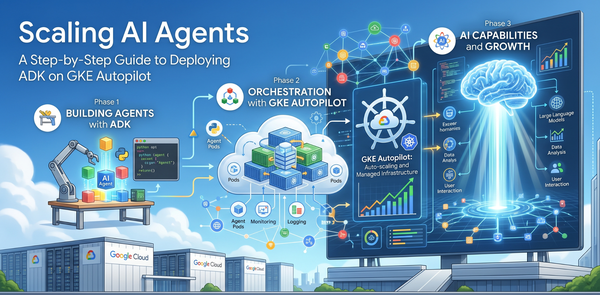
While building AI agents locally using Google’s Agent Development Kit (ADK) is an excellent way to prototype, production-ready agents require a robust, scalable infrastructure. For developers looking to move beyond simple instances and into the world of managed container orchestration, Google Kubernetes Engine (GKE) Autopilot offers the perfect balance of flexibility and ease of use. In this tutorial, I will…
2 Jun
Google Cloud Storage (GCS) is a foundational component of the modern agentic tech stack and the preferred home for unstructured data at scale. As enterprises deploy agents in production, the critical focus has shifted to turning data into context and building secure, standardized integrations to access context. This is the core of smart storage: making unstructured data inherently agent-ready by…

What happens when your workload fails in one region but you need access to service? This is a common case for availability and uptime. With recent enhancement to the Kubernetes ecosystem and capabilities like Dynamic Resource Allocation (DRA) and Inference Gateway. I decided to experiment with these capabilities in Google Cloud for a simple test using an AI inference workload.…