
Traditional data replication techniques often struggle to deliver the data freshness that modern workflows require. To help organizations overcome this challenge, SAP and Google Cloud are announcing that SAP Business Data Cloud Connect for BigQuery is now generally available. As the next phase of our long-standing partnership, SAP BDC Connect for BigQuery gives you zero-copy access to data products across…
Google Cloud
https://cloud.google.com/blog/ · 128 posts · history since 2026 · active
Yesterday

Even as machine-speed attacks dominate the headlines, Mandiant’s view from the frontline reveals that the vast majority of successful intrusions still stem from fundamental human and systemic failures. This operational break-down shows up pointedly in research from the M-Trends 2026 report. Exploits remain the most common initial infection vector for the sixth consecutive year at 32%, voice phishing surged to…
The National Oceanic and Atmospheric Administration (NOAA) is embarking on a transformative journey to redefine how we understand and predict patterns in the Earth’s atmosphere that affect the weather we face every day. Today, we are proud to announce that Google Cloud was selected as the primary provider of high-performance computing (HPC) infrastructure for the Weather and Climate Operational Supercomputing…
24 Jul
When we introduced the Open Knowledge Format (OKF) in June 2026, we asserted that the context that agents need (table schemas, metric definitions, runbooks) should live in a format, not in a proprietary service, and not scattered across unstructured text blobs. Accordingly, OKF v0.1 started simple: just markdown, YAML frontmatter, and a handful of conventions. The strong response and contributions…
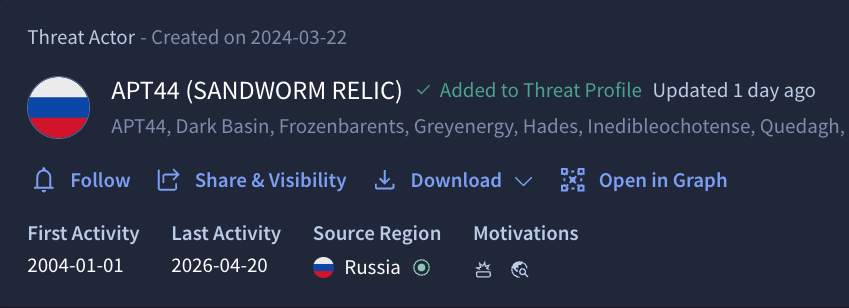
Introduction Today, Google Threat Intelligence Group (GTIG) will begin rolling out a unified naming schema for tracking threat actors. This new naming taxonomy represents an effort to standardize tracking across platforms and public reporting. Why are we Adopting a Different Naming System? Historically, Mandiant and Google’s Threat Analysis Group (TAG) maintained distinct tracking systems, relying on parallel naming schemas that…
23 Jul

The math behind reinforcement learning (RL) post-training for large language models (LLMs) is notoriously unforgiving. As frontier AI labs push the boundaries of reasoning and coding models using RL post-training algorithms like Group Relative Policy Optimization (GRPO), they routinely hit hard architectural and infrastructure constraints. While much of the industry's focus remains on acquiring raw accelerator capacity, infrastructure efficiency is…
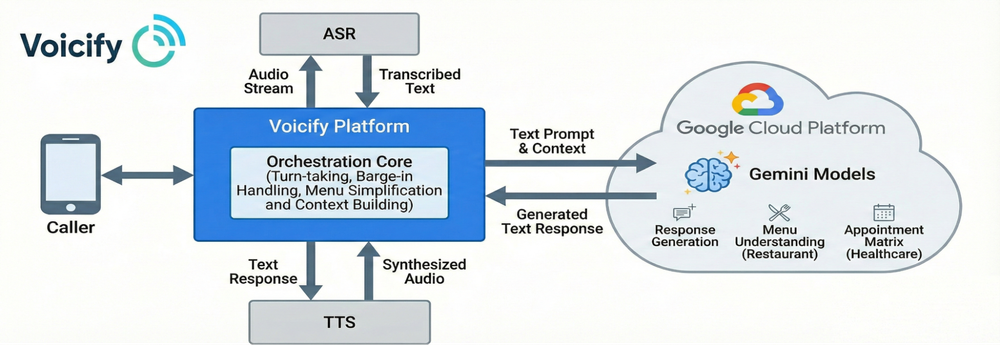
Welcome to The Blueprint, a new feature where we highlight how Google Cloud customers are tackling unique and common challenges across industries using the latest AI and cloud technologies. We hope to inspire others looking to innovate in their work. Founded in 2018, Voicify reimagines the traditional phone call with the goal of transforming every call into a seamless and…

What’s one of the biggest bottlenecks stopping organizations from scaling their AI initiatives? It isn’t the capabilities of today’s models — it’s their access to business context and semantic meaning. In the agentic era, enterprises need to go beyond simply storing data to activating it with trusted context, moving from passive systems of record to proactive systems of action. But…
22 Jul
Data engineering teams often face a “Day 2” operational reality after building a data platform: the ongoing work of maintaining the orchestrator itself. For the Data Platform team at Checkout.com, managing a self-hosted Apache Airflow environment on another hyperscaler was consuming time the team wanted to spend elsewhere as server management, patching, and incident response were pulling focus from building…

Scientists today face challenges of extraordinary scale and complexity. From shaping and simulating the intricate dynamics of fusion plasma, to exploring the vast search space of new materials, to making sense of the exabytes of data pouring out of the world's most advanced experimental facilities. The demands on modern research are unprecedented. Frontier AI can help address these challenges, while…
21 Jul
We are living in the golden age of the weekend AI side project. Thanks to agentic engineering and LLMs, the time to go from a blank IDE to a functional local application has dropped from quarters to hours. You can build your wildest ideas over a cup of coffee. But inside an enterprise ecosystem with rigid infrastructure and millions of…

AlloyDB is a fully managed, PostgreSQL-compatible database service built for your most demanding enterprise workloads. It combines the best of open source PostgreSQL with Google’s advanced technology, offering massive scalability, high availability, and native AI capabilities. It serves as a performant relational store, a unified backend for vector and full text search, and an analytics engine that is up to…
As adversarial AI threats accelerate attacks on code, security teams must counter them with machine-speed defenses that can automate code remediation and fight AI with AI. CodeMender is our managed code security agent, and starting today, we're bringing its code scanning and remediation capabilities directly to you in preview. CodeMender offers access to our generally available models via Gemini Enterprise…

In Google Cloud, Identity and Access Management (IAM) helps you maintain access control over your cloud resources and operations. While it includes other features, this is its primary purpose. If you ever tried to harden security over your application, you know the importance of the Principle of Least Privilege (PoLP) ‒ grant the absolute minimum permissions to your users and…
20 Jul

As the automotive landscape accelerates toward software-defined vehicles, Cockpit Domain Controllers (CDCs) are becoming the core of next-generation in-cabin experiences. The ability to rapidly develop, test, and validate CDC software in a flexible, hardware-independent environment is critical for innovation and time-to-market. However, physical hardware constraints and the requirement for high-performance graphics present significant challenges for global development teams. Panasonic Automotive
Application downtime for mission-critical services can directly impact your reputation and bottom line. To avoid that, you need to be able to deploy regionally resilient workloads that detect and automatically recover from failures. But setting up multi-region, highly available deployments often involves complex configurations, and responding to incidents or outages is usually a manual process. Multi-region services on Cloud Run…
17 Jul

Earlier this year, we introduced Gemini Enterprise Agent Platform, where you can build, scale, govern, and optimize agents. Today, we’re sharing 13 demos that walk you through what Agent Platform can do. Each one teaches a concept, a pattern, or an architecture you can put to work immediately. The best part? You don't have to follow them step-by-step. Install Agents…
Many BigQuery customers rely on policy tags for protecting their sensitive information in BigQuery. Policy tags were the go-to solution for applying column-level access controls, allowing only users with the right permission to view sensitive columns like personally identifiable information (PII). It was a robust and effective system — for its time. However, data ecosystems have grown in complexity, and…
Optimizing token consumption is key to keeping AI coding assistants fast and accurate. You might not be writing every line of code any more, but now you’re responsible for directing those coding assistants to focus on getting the most out of each token. Context bloat increases latency and causes models to forget instructions or hallucinate, it also costs money and…
16 Jul

For the second consecutive year, Google has been named a Leader in the Gartner® Magic Quadrant™ for Conversational AI Platforms. Google received the furthest and highest in positioning on the "Vision" and "Execution" axes and is now ranked #1 in three out of four Critical Capabilities Use Cases. We believe this recognition reflects our continued investment in frontier AI research,…
Welcome to the first Cloud CISO Perspectives for July 2026. Today, Francis deSouza, COO, Google Cloud and President, Security Products, explains the crucial role that deep context plays in creating an AI advantage for defenders. As with all Cloud CISO Perspectives, the contents of this newsletter are posted to the Google Cloud blog. If you’re reading this on the website…
Have you run into problems migrating your products from one model to the next? Upgrading to the latest AI models is rarely simple. For engineering teams, model updates whether migrating to an entirely new model or updating to a newer checkpoint within the same model family, like moving from an earlier Gemini version to Gemini 3.5 — often require a…

Data scientists and data engineers often find themselves caught between two worlds: SQL and Python. Some find SQL more intuitive, especially when combined with a powerful engine like BigQuery to process data at scale. Others find it easier to work in Python with its rich ecosystem of libraries and runtimes. Historically, using these languages together in one notebook required moving…
Can teams of AI agents collaborate to create a short film? As part of an internal Google generative media hackathon, we put this question to the test – specifically, to uncover whether AI agents could work collaboratively in a domain less innately familiar than software development. We gave each crew three agents with distinct roles and had them collaborate through…
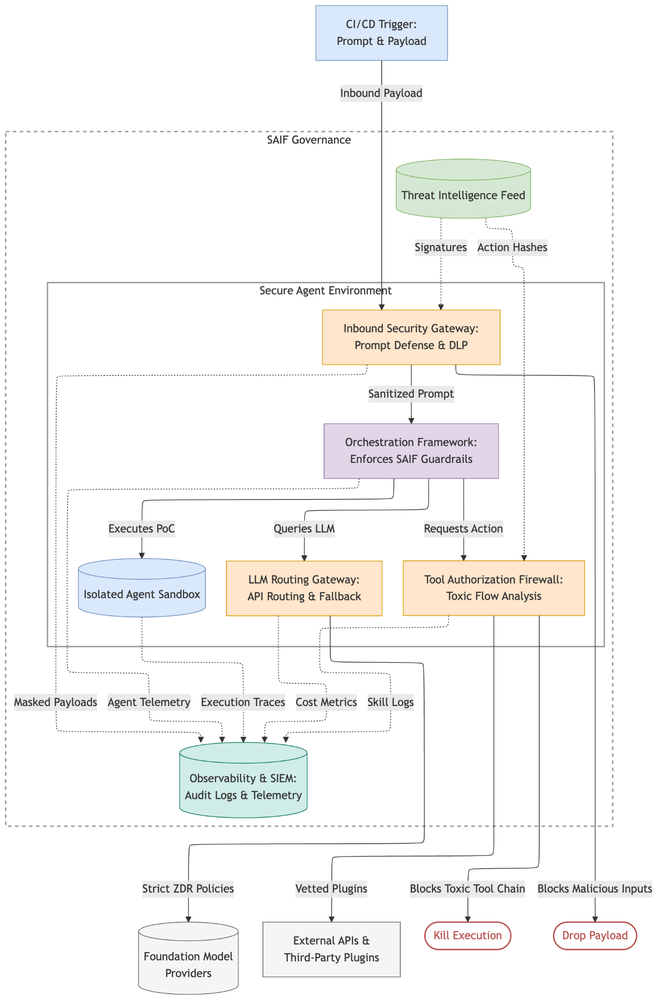
Written by: Jules Czarniak Introduction As highlighted in the Mandiant M-Trends 2026 report, the mean time-to-exploit (TTE) has dropped to -7 days, meaning vulnerabilities are often exploited a week before a patch even exists. To keep pace, many security teams are exploring how to integrate large language model (LLM) agents into their codebases, development environments and continuous integration and continuous…

Artificial intelligence is moving from prototype to production faster than traditional security paradigms can adapt. For CISOs and platform engineering teams, the challenge is clear: you need to protect proprietary model weights, defend against novel application-layer threats like prompt injection, and enforce strict regulatory compliance—all without slowing down your AI developers. To meet all of these security goals, you need…
15 Jul
Editor’s note: Today we hear from IDC on the results of its 2026 AI in Networking Special Report Survey exploring the enterprises' concerns about networking infrastructure to support the rise of agentic AI in their organizations. The survey was sponsored by Google Cloud. Enterprises are moving quickly on AI pilots, but the move from pilot to production remains uneven. While…

Deploying the Gemini Enterprise app across an organization marks a transformative leap forward in workforce productivity, providing employees with an amazing, high-performance suite of agentic AI tools, search-grounded assistants, and specialized solutions like NotebookLM. As adoption grows to a large scale, it can introduce a critical administrative scale challenge: how to audit, govern, and extract insights from a massive volume…
AlloyDB powers enterprise-grade search for some of the largest organizations, providing robust hybrid search capabilities that combine text, vector, and keyword searches into a simple ranked SQL query. And with our recent launch of RUM index support, AlloyDB customers now have even more powerful full-text search capabilities at their fingertips. However, database developers often face limitations when indexing continuous text…
Written by: Corné de Jong Introduction Mandiant security assessments frequently identify publicly exposed serverless applications that lack authentication, often as a result of specific business requirements. Serverless deployments typically run custom-developed code that incorporates third-party packages, making them targets for a wide range of application-level attacks, including: Local and Remote File Inclusion (LFI/RFI) Command Injection Successful exploitation of these vulnerabilities…
14 Jul

For years, we’ve built with a clear priority: putting the practical needs of the enterprise first. Long before generative AI dominated the headlines, we were focused on building the global infrastructure, security frameworks, and data platforms that power the world's largest organizations. We’ve always believed that technology is only as good as its reliability, security, and predictability in production. By…
Running frontier AI in production is demanding — accelerators to manage, latency to hold steady across continents, regulated data to keep in-region, and long-context requests to serve reliably. Claude on Google Cloud is built for exactly this. Like Monet and water lilies, frontier models and the enterprise platforms are often better together. In our case, Claude brings the reasoning, and…
13 Jul
In 2026, the public sector is no longer defending a traditional perimeter. Instead, they are defending a complex web of interconnected trust relationships against adversaries that now operate at machine speed. We recently published the 2026 Public Sector Threat Landscape: M-Trends and Beyond report, which distills more than 500,000 hours of frontline incident investigations conducted by Mandiant in 2025, specifically…

How should your security team manage shadow AI? Workloads deployed by developers without formal registration can often evade traditional security scanners, because organizations are reluctant to slow down development and compromise stability by demanding privileged Daemonsets, kernel-level access, and manual pod-spec edits. To break this deadlock, today we are open-sourcing k8s-aibom. This lightweight, unprivileged Kubernetes controller continuously monitors the cluster…

The automotive industry is moving from building hardware-centric platforms toward building their own sophisticated Software-Defined Vehicle (SDV) architectures. For OEMs, a vehicle is no longer just a way to go from point A to point B, but an intelligent, connected node within an AI-native ecosystem! With its partners, Google’s Android and Google Cloud are at the forefront of this transition.…
10 Jul
At Google Cloud, we take our role in the financial ecosystem very seriously. We firmly believe that operational resilience is essential to driving and sustaining responsible innovation. Today, we mark a milestone in our ongoing commitment to the financial sector that’s directly relevant to our customers in the U.K. On July 10, the U.K. Treasury designated Google Cloud EMEA as…

Editor’s note: Some of the most interesting questions in AI are being asked by information theoreticians, around how to provide context to an emerging class of AI agents. A few weeks ago, we waded into those waters with a blog about the Open Knowledge Format, a specification that formalizes the LLM-wiki pattern into a portable, interoperable format to represent the…
9 Jul

Here’s a question we hear often at Google Cloud: How do you safely run AI-generated code or untrusted binaries without putting your host application, data, and cloud credentials at risk? In other words, how do you give AI-written programs a safe space to run — one that keeps them completely separate from your trusted programs with higher privileges? Until now,…
Many of the most challenging and valuable problems in the world are related to optimization. Now, AI is now making these problems tractable. If you've ever tried to design a microchip, plan a delivery network, or optimize a training architecture for a large AI model, you know how hard it is to find the most optimized code. Traditional coding methods…

Google Kubernetes Engine (GKE) managed DRANET supports both GPUs and TPUs. There are several configurations to use this implementation, including standard cluster (where you have full control) and autopilot cluster (where Google does the heavy configs for you). I've been exploring the capabilities and in this blog we will explore setting up for autopilot clusters. Autopilot and managed DRANET GKE…
8 Jul

As organizations scale modern workloads — from high-throughput databases and network/security appliances to real-time analytics and AI/ML inference — network and block storage performance can quickly become a bottleneck. Standard virtual machines often struggle to balance compute efficiency with the high-volume data-transfer demands of these applications. At Google Cloud Next ‘26, we announced C4N in preview, our first network- and…

In the agentic era, AI is evolving from answering questions to reasoning and taking action. Companies who want to lead in this next phase of AI need computing infrastructure that’s designed and optimized for these new requirements, helping them innovate faster, deliver compelling user and customer experiences, and optimize for cost and energy efficiency — all at massive scale. Today,…

If you’re reading this, you’ve likely already done the hard work to prove your qualifications with a Google Cloud certification. And good for you — research shows that’ll help you get ahead. Certified individuals report more responses from recruiters, faster promotions, and higher salaries. In fact, 81% of organizations say certifications from Google Cloud increase their confidence in a job…

The agentic AI era is here, transforming how higher education institutions innovate, operate, and fundamentally empower learners, faculty, and researchers. AI agents can deliver unprecedented efficiency, academic innovation, and mission effectiveness as institutions seek to diversify pedagogy, accelerate research, and automate campus operations. That’s why we are proud to share that The Tambellini Group has named Gemini Enterprise for Education…
Startups are at the forefront of tackling some of the world’s most complex challenges, especially in cybersecurity, where new ideas and adaptability are always needed. These companies are embracing AI as a powerful tool, enabling them to scale their impact. Google believes that enabling the next generation of AI-native cybersecurity startups will have a positive impact across the globe. Today,…
7 Jul
If you’re an IT leader, you might be getting a lot of questions about how to build and deploy agents. The pressure to move fast is intense, but the engineering reality is incredibly complex. Where do your teams even begin? How do you untangle a fragmented mess of disconnected tools? And as things grow, how do you ensure your agents…
Software-as-a-service (SaaS) is evolving into Agents-as-a-service (AaaS). Instead of isolated applications, developers are creating AI agents that interoperate using standardized open protocols such as the Agent2Agent (A2A) protocol and can be orchestrated through centralized agent platforms like Gemini Enterprise Agent Platform. When building for your specific use case, we believe the goal should always be to engineer high-quality agents that…
When we first made BGP route policies for Cloud Router generally available over a year ago, our goal was to give network administrators deep, programmable control over how network paths are evaluated and propagated. Since then, we’ve been watching closely how our customers have adopted this feature. We've seen network engineering teams build incredibly sophisticated, resilient routing architectures that were…

Being more proactive continues to be a leading goal for security organizations. As AI accelerates the pace of vulnerability discovery and exploitation, organizations will rely on the personalization of their security investments to help prioritize their defenses. To help you be more proactive by matching your real-world exposures with real-time adversary activity, we’ve begun integration efforts between Google Threat Intelligence…
For years, enterprise AI has been synonymous with conversational AI — the customer service bots and digital assistants we interact with every day. But today, the market has shifted. We’ve officially moved from moving from AI that answers through simple chats, to AI that takes action, automated workflows, and executes complex tasks on its own. While this unlocks entirely new…

Moving Beyond the Prototype The AI landscape has shifted. While "vibe coding" with tools like Antigravity and AI Studio lets you build and deploy complex agents in minutes, the real work begins on "Day 2". Moving from a magical prototype to a hardened, production-grade application requires professional AI engineering. We’re excited to bring back the Accelerate AI with Cloud Run…
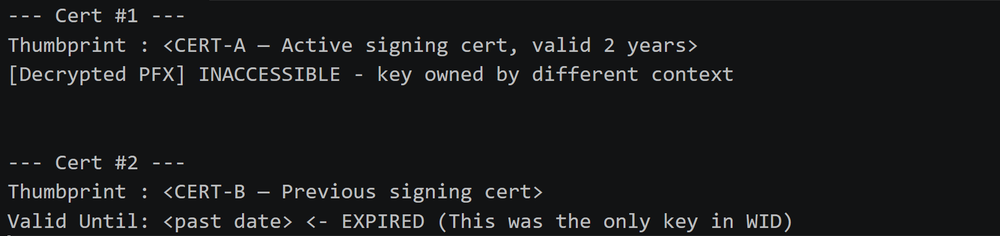
Written by: Shebin Mathew Introduction The "Golden SAML" technique, first described by CyberArk researchers in 2017, and further detailed by Mandiant researchers in 2021, remains one of the most effective methods for threat actors to forge identity assertions in the Microsoft ecosystem. By obtaining the private key of an ADFS token-signing certificate, an attacker can authenticate as any user to…
6 Jul

The automotive industry is at a pivotal crossroads as it hits the gas on adopting new technology. The era of the traditional connected vehicle has shifted into the age of the software-defined vehicle (SDV), notable for rapid innovation with many new capabilities delivered over the air. By integrating AI and agents, the next generation of SDVs will be capable of…
2 Jul
Background Today, in coordination with the FBI, Lumen, and others, Google took action against the NetNut residential proxy network, also known as Popa. This action builds on our disruption of the IPIDEA proxy network that took place in January 2026, and is a continuation of Google’s objective to dismantle malicious residential proxy networks. Actions Taken As a part of this…
1 Jul
Editor’s note: SOCRadar is a leading cybersecurity company that provides threat intelligence to businesses worldwide. As the volume of cyber threats continued to grow, SOCRadar needed to modernize its data infrastructure to deliver faster insights to its customers. By migrating from PostgreSQL to AlloyDB, SOCRadar achieved a 20x performance boost, reduced operational overhead, and is now better positioned to innovate…

AlloyDB is an AI-native database—it isn’t just a passive data store, it intelligently understands and processes your data. With AlloyDB, you get industry-leading vector and hybrid search, near 100% accurate natural language-to-SQL capabilities to build conversational agents, tools to enable you to build with your agentic IDEs of choice, and the ability to bring the intelligence of foundation models like…
Security leaders are now expected to protect business growth and clearly articulate security value to their board of directors, in addition to managing risk. While translating technical defense into measurable financial returns can be challenging, Mandiant Consulting can help you bridge the gap. Organizations that engaged with Mandiant Consulting reported an average annual benefit of $4.3 million, driving a 268%…

Anthropic's agentic coding tool Claude Code has worked with Google Cloud for a while now. An individual developer could easily point CLAUDE_CODE_USE_VERTEX=1 at a Google Cloud (GCP) project, grant the role roles/aiplatform.user, and inference stays inside your Google Cloud perimeter. That flow works great when it’s just you, or a handful of engineers. But rolling it out across an organization…

For the third consecutive year, Google has been recognized as a Leader in the 2026 Gartner® Magic Quadrant™ for Analytics and Business Intelligence Platforms. This recognition comes on the heels of Google Cloud Next 2026, where we feel we showcased a fundamental evolution in how enterprises interact with data: the shift from a reactive system of intelligence to a proactive…
At Google Cloud, we are committed to providing public sector organizations around the globe with cloud technology that is highly flexible, scalable, and built with market-leading standards for data protection, sovereignty, and security. We understand that for public sector organizations in the European Union, confidence in data protection is not just a preference — it’s a prerequisite. Today, we’re excited…
As enterprise generative AI transitions from simple, conversational chatbots to autonomous multi-agent workflows, developers face a critical bottleneck: scale. In a production environment, an enterprise agent often needs to navigate hundreds of heterogeneous data structures, dynamic business rules, and shifting API schemas. The standard blueprint relies on "Static Prompting"—pre-loading all potential JSON schemas, Pydantic classes, or tool definitions directly into…
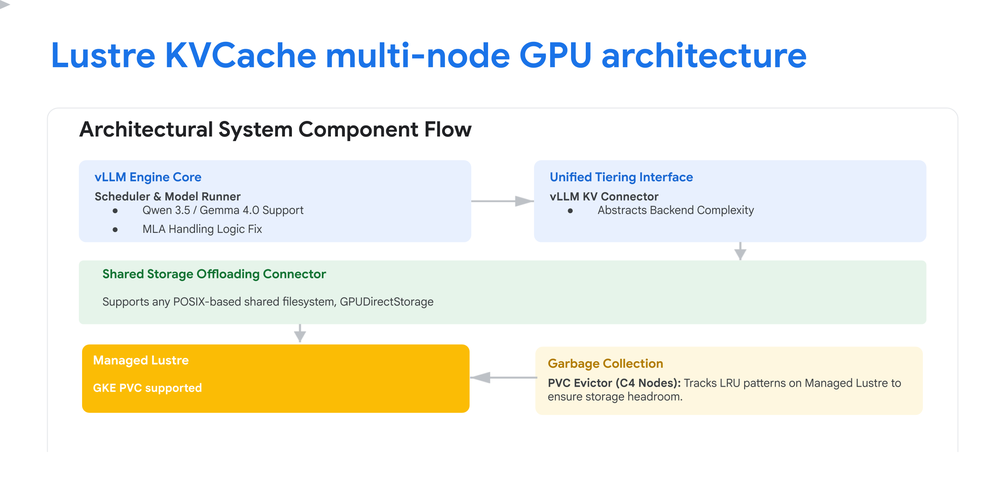
Significant contributors to this article include Sneha Aradhey, Software Engineer, Google Kubernetes Engine, and Michael MacDonald, Sr Software Engineer, Google Cloud Managed Lustre. Enterprise production environments are shifting to distributed, multi-node architectures to serve long-context window lengths and agentic AI. As these workloads scale, KVCaches often outgrow local CPU RAM and host SSD cache tiers. To handle this, some setups…
30 Jun

Businesses run on fast decisions, but the teams who hold the answers are often buried under a backlog of routine requests, leaving users waiting in line for insights they need now. Today, we are bringing Conversational Analytics in BigQuery to general availability, so both business and technical teams can query data, run multi-step analyses, and generate visual reports using natural…
The financial services industry (FSI) operates under a unique set of non-negotiable requirements: the need for strict regulatory compliance, sub-millisecond transactional speeds, and security that verges on impenetrable. Historically, organizations have met these standards by relying on brittle, proprietary database systems, leaving them with massive technical debt, operational overhead, and vendor lock-in. At the same time, financial services companies are…

Computational chemistry researchers have traditionally faced a frustrating trade-off when simulating molecular interactions: use fast classical force fields that sacrifice precision or rely on accurate quantum-mechanical methods that run too slowly on large jobs. Machine-learned force fields (MLFFs) close that gap by training neural networks on high-fidelity quantum data. When it comes to modern drug discovery and materials design, though,…
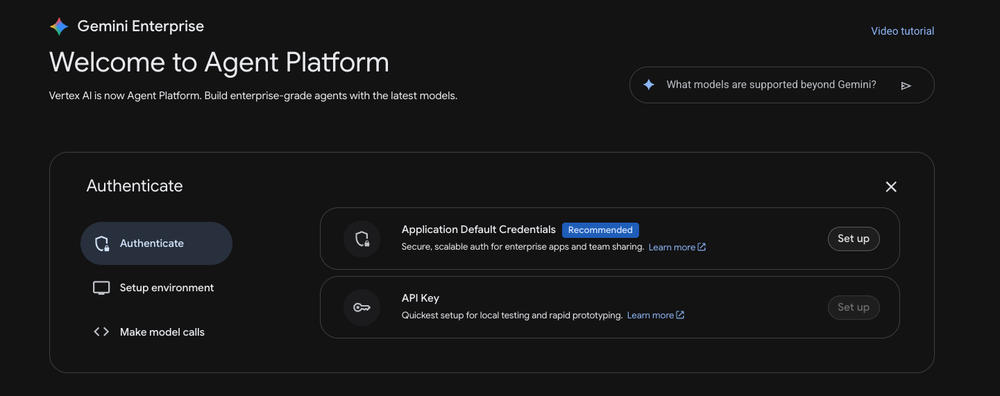
A couple of months ago, we announced that over 50 Google-managed MCP servers are available. Today, we’ll dive into how to use the Gemini Enterprise Agent Platform remote MCP server to securely connect your external AI agents to the resources inside your Google Cloud environment. Connect your IDE to Google Cloud Think of the Agent Platform MCP server as a…

Great creative happens when your tools move at the speed of your ideas. To help you create rich, reliable experiences while reducing regeneration time and costs, we’re adding two new models to Gemini Enterprise Agent Platform. First, we’re announcing the general availability of Nano Banana 2 Lite (Gemini 3.1 Flash-Lite Image). This model is the fastest and most cost-efficient image…

Choosing the threshold of an alert policy can be a headache. You have to analyze historical data, aggregate it into semantically meaningful time series, and choose a threshold that matters. If the workload grows, your previously set static threshold might become too low, and your alert might fire too frequently. New workloads might require setting new thresholds, and setting separate…

Editor’s note: Want to keep up with the latest from Google Cloud? Check back here for a monthly recap of our latest updates, announcements, resources, events, learning opportunities, and more. Our main focus in June was helping your teams build, scale, and secure AI. Today, we’re sharing a fresh roundup of updates designed to help you run smarter, more secure…
29 Jun

In the agentic era, the role of the database has fundamentally changed. It is no longer a passive repository; it’s a critical context engine designed to ground generative AI apps, models and power autonomous workflows. To do this effectively, databases must move beyond fragmented architectures and embrace a unified, multi-model foundation, facilitating deep reasoning and transforming static data into a…
Based in the UK, Curve are building a financial super-app, a smart wallet that consolidates all your debit and credit cards into a single app and card, simplifying how millions of users spend, send and save money. However, operating at this scale means confronting a high-volume, ever-evolving landscape of financial crime. While traditional fraud detection models are excellent at flagging…
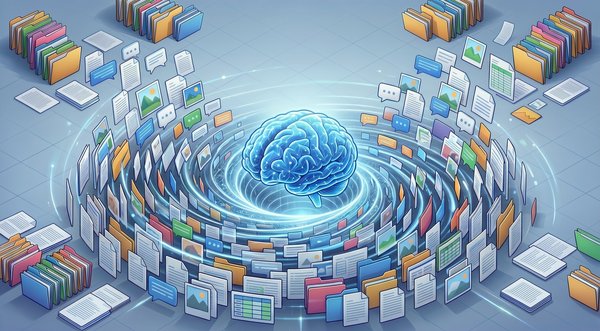
We recently announced the preview of the BigQuery AI.AGG() function. With AI.AGG(), you can use natural-language instructions within a single line of SQL to summarize or synthesize information over millions of rows of unstructured or even multimodal data. Summarize millions of rows with one line of SQL: AI.AGG While BigQuery already offers powerful AI functions that help you analyze individual…
Welcome to the second Cloud CISO Perspectives for June 2026. Today, we’re discussing how we use AI to chart a path to autonomous software development lifecycle security. As with all Cloud CISO Perspectives, the contents of this newsletter are posted to the Google Cloud blog. If you’re reading this on the website and you’d like to receive the email version,…

Written by: James Sadowski, Alden Wahlstrom Introduction Four years into Russia’s full-scale invasion of Ukraine, the pro-Russia influence ecosystem has evolved from a tool of war back into a global strategic asset. Since the mobilization of this ecosystem to support frontline objectives, we have witnessed the expedited development of new influence assets linked to multiple, expansive, covert information operations (IO)…

Editor’s note: Today’s post is by Scott Gatreau, Director of Information Security, at Turner Industries, a privately owned industrial contractor that provides construction, maintenance, and fabrication services. To streamline their one-stop shop service model and support their mission to reduce costs and increase efficiency, Tuner Industries turned to ChromeOS, Google Workspace, Chrome Enterprise Premium and Cameyo. This integrated tech stack…
26 Jun

As enterprises scale autonomous AI agents into production, enabling safe innovation requires robust architectural guardrails. AI agents connect across tools and datasets, so it’s essential to establish clear network-level boundaries for comprehensive data protection. To help organizations confidently deploy these workflows, we recommend VPC Service Controls (VPC-SC) to establish an essential network-level, destination-based perimeter. Today we’re announcing several new capabilities…

Traditional alerting systems often force a compromise: you can either alert immediately on simple, noisy log events, or monitor rigid, pre-configured metrics that fail when faced with data with many unique answers like user sessions or IP addresses. But the most critical system issues — like a 20% spike in error rates for a specific customer or a latency anomaly…
25 Jun

Written by: Jordan Jones Introduction Google Threat Intelligence Group (GTIG) has conducted an in-depth analysis of a .NET backdoor, tracked as STOCKSTAY, that has been continually developed and deployed by the Russia-linked threat actor Turla (aka SUMMIT, Secret Blizzard, VENOMOUS BEAR, UAC-0194) since at least December 2022. Turla has deployed STOCKSTAY against government and military organizations in Ukraine, as well…
24 Jun

To maintain business continuity, you need a robust data-backup strategy. While multi-region backups offer the highest availability, many organizations want a more cost-effective way to protect their data against a regional outage, but still adhere to data residency requirements. Building on our foundation of multi-region backup protection, we are excited to announce the general availability (GA) of cross-region backups for…
Written by: Chester Sng, Pete Boonyakarn, Logeswaran Nadarajan Introduction In early 2026, Mandiant identified a threat actor targeting SD-WAN infrastructure at a service provider. After gaining initial access, the threat actor exploited a zero-day vulnerability (CVE-2026-20245) in Cisco Catalyst SD-WAN to escalate privileges from a compromised administrative account to root-level access. The vulnerability stems from the device’s file upload feature…
23 Jun
To effectively operate and troubleshoot applications, developers and site reliability engineers (SREs) need to understand the full context of their system's behavior, typically as part of their logging and observability tooling. Today, we’re excited to announce a variety of new capabilities in our Google Cloud Observability suite: Log Analytics is now Observability Analytics. Trace data within Observability Analytics is generally…

Protecting sensitive data used with AI is a critical part of our commitment to providing advanced and secure cloud infrastructure. Confidential Computing cryptographically protects data in use in hardware-based Trusted Execution Environments (TEEs) with verifiable data integrity. We are thrilled to share our latest Confidential Computing innovations across our hardware ecosystem that help further strengthen verifiable privacy in cloud AI…
Telecommunications is an incredibly complex, highly specialized domain. Modern mobile networks are inherently multi-vendor, featuring diverse and often proprietary data structures. While AI has made massive leaps in general language and coding, telecom domain knowledge is rarely accessible on the open internet — there is simply no "Wikipedia" for telecoms. This data scarcity creates a major hurdle for AI models…
22 Jun
SQL is the industry standard for high-performance structured data analysis. However, expressing complex procedural logic, scientific computations, advanced string manipulations, or machine learning workflows in pure SQL can be highly challenging, if not impossible. That kind of work is better done with Python. Data practitioners often take on additional infrastructure management tasks — maintaining custom images and containers, and working…

You've got a working prototype in Google AI Studio. A React frontend, a Node.js backend, maybe a database. Now you want a live URL to share with your team, your users, or a friend who wants to try it. Google Cloud gives you a full platform for deploying production applications, with fine-grained IAM controls, billing management, and region selection. That's…
18 Jun

Developers looking for LLM inference and model serving often turn to Ray Serve, a scalable model serving library with developer-friendly, Python-native APIs built by Anyscale. Combined with Google Kubernetes Engine (GKE), developers have a powerful, unified platform optimized for demanding LLM serving use cases, spanning from initial model development to online production serving. However, that flexibility and feature set used…

In the high-stakes world of tech entrepreneurship, the leap from a brilliant prototype to a scalable, market-defining business can be brutal. Founders need much more than capital; they need deep architectural guidance, sovereign-level policy alignment, and technical systems engineered to enable rapid growth. Joy’s Law states: "[N]o matter who you are, most of the smartest people work for someone else."…
The European Commission’s Tech Sovereignty Package comes at a defining moment for the continent's digital future. European competitiveness and security are top of the agenda for European business, institutions, and citizens, and a significant investment in European digital capacity is needed to deliver those goals. In that context, it is understandable that Europe is considering how to boost the European…
In this episode of the Agent Factory, I sat down with Rody Davis, one of Google’s top agentic engineers. We dive into the massive shift from traditional IDEs to agent-first platforms, the reality of code reviews in an AI-driven world, and how to use "skills" to perform at a 100X level. This post guides you through the key ideas from…
17 Jun
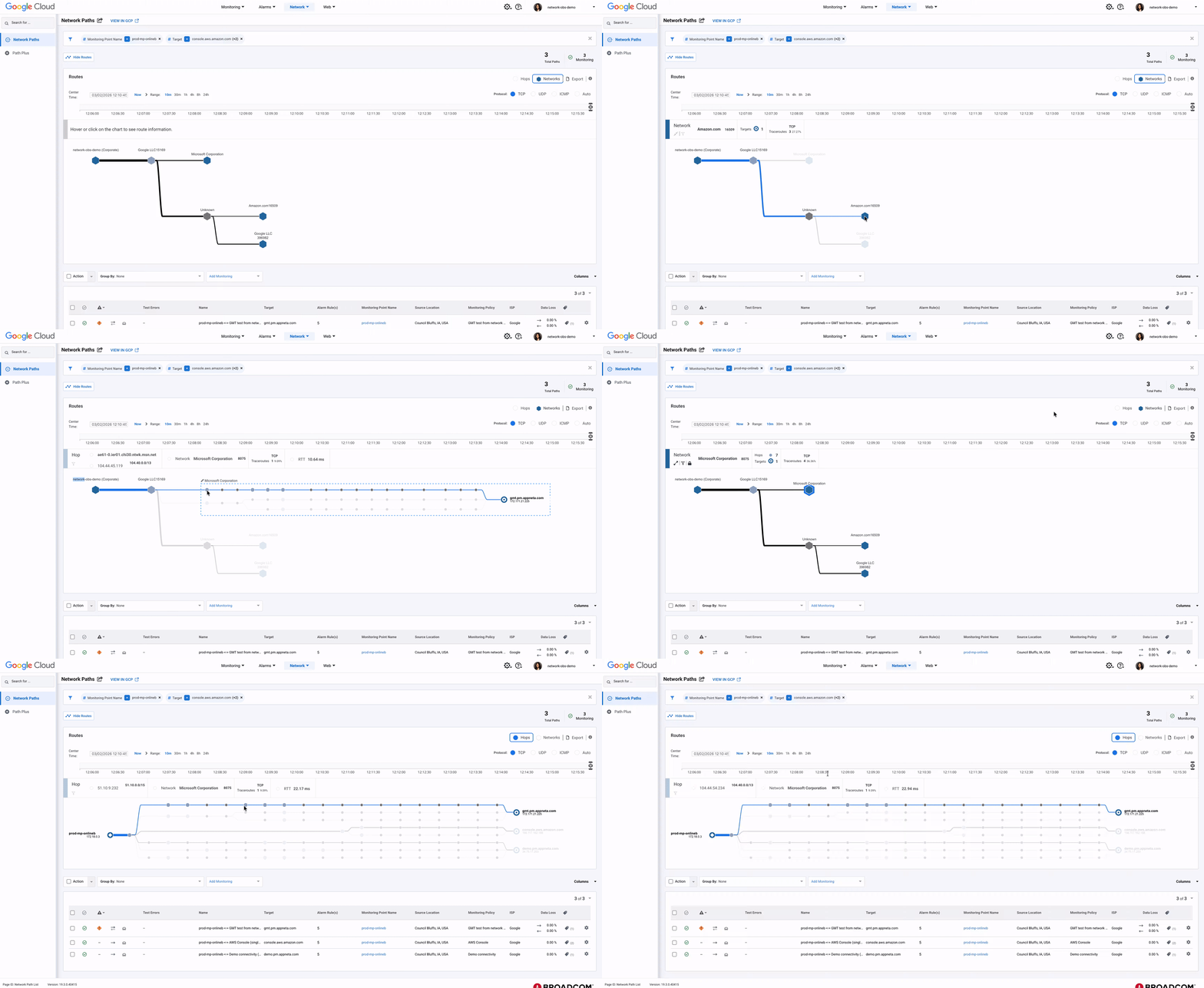
In today’s digital landscape, the network is no longer confined to a single data center or even a single cloud provider. Enterprises are increasingly adopting cross-cloud strategies, connecting Google Cloud workloads to on-premises environments, other clouds like AWS and Azure, and a vast array of internet-facing applications. While this flexibility drives innovation, it can also introduce significant operational complexity. When…

The UK’s 5-million-plus small and midsize businesses and enterprises (SMBs) are the backbone of our economy. Today, we’re seeing these critical businesses begin to put AI to work, to operate more efficiently, move faster, and ultimately deliver better outcomes for their customers. This shift is driven by tangible day-to-day results. According to recent research from Enterprise Nation published in partnership…

The United Kingdom, and London in particular, continues to be one of the great hubs for AI development in Europe and the world. We’re home to Google DeepMind, of course, as well as significant AI unicorns — and Google Cloud customers — like Ineffable Intelligence, which is today announcing an important partnership with us. A year ago, we joined you…

Build and Deploy a Remote MCP Server to GKE in 30 Minutes Integrating context from tools and data sources into LLMs can be challenging, which impacts the ease of development for AI agents. To address this challenge, Anthropic introduced the Model Context Protocol (MCP), which standardizes how applications provide context to these models. Developers often want to build an MCP…
16 Jun

Security operations teams are under immense pressure to defend against adversaries who use AI to act with unprecedented speed, scale, and sophistication. To navigate these moments, secure mission-critical workloads, and build confident defense programs, organizations rely on modern security information and event management (SIEM) systems as the backbone of their security operations. We are proud to announce that Google has…

Next-generation artificial intelligence (AI) and high-performance computing (HPC) chips routinely exceed 1000 W Thermal Design Power (TDP). Simply put, standard air cooling cannot manage these extreme heat loads. The alternative — retrofitting entire data center facilities with chilled water loops — requires extensive amounts of capital and time. To solve this problem, Google developed Brazos, a rack-mounted, closed-loop liquid-to-air cooling…
Atlas is building the operating system for restaurants. Online storefronts, point of sale, third-party logistics, food platform integrations, customer loyalty, and AI tools represent everything a restaurant needs to start, run, and grow. We work with brands like SaladStop, Killiney, Haidilao, Raffles Hotel, Lo and Behold Group and the Les Amis Group in Singapore, helping merchants increase basket sizes, grow…

A key goal for many enterprises in the AI era is to empower their employees to uncover actionable data insights on their own. To help, we are evolving Looker Explore with a streamlined interface and integrated AI, so every usey can confidently turn data into a clear path to action. A team of AI assistants At the heart of the…
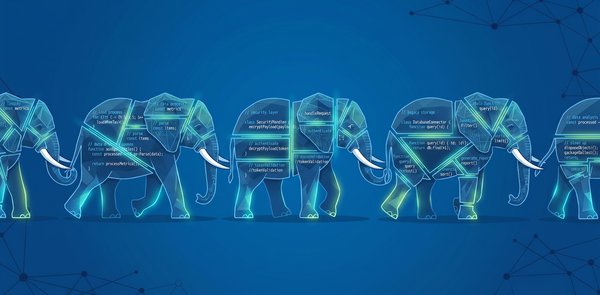
For technology companies like Siemens, software is the nervous system of factories, energy grids, and transportation networks worldwide. As a global leader in industrial AI, industrial software, and industrial automation, Siemens brings decades of domain expertise across factory and process automation, energy infrastructure, and intelligent transportation — expertise that no off-the-shelf AI solution can replicate. But innovation carries a heavy…

At Google Cloud, we believe that the best products are built in partnership with our customers. Their feedback and real-world experiences are invaluable in helping refine our services and deliver solutions that truly meet our customers’ needs. In January 2026, our Google Cloud Developer Advocacy team participated in a high-velocity technical sprint with a major Google Cloud customer and a…
15 Jun
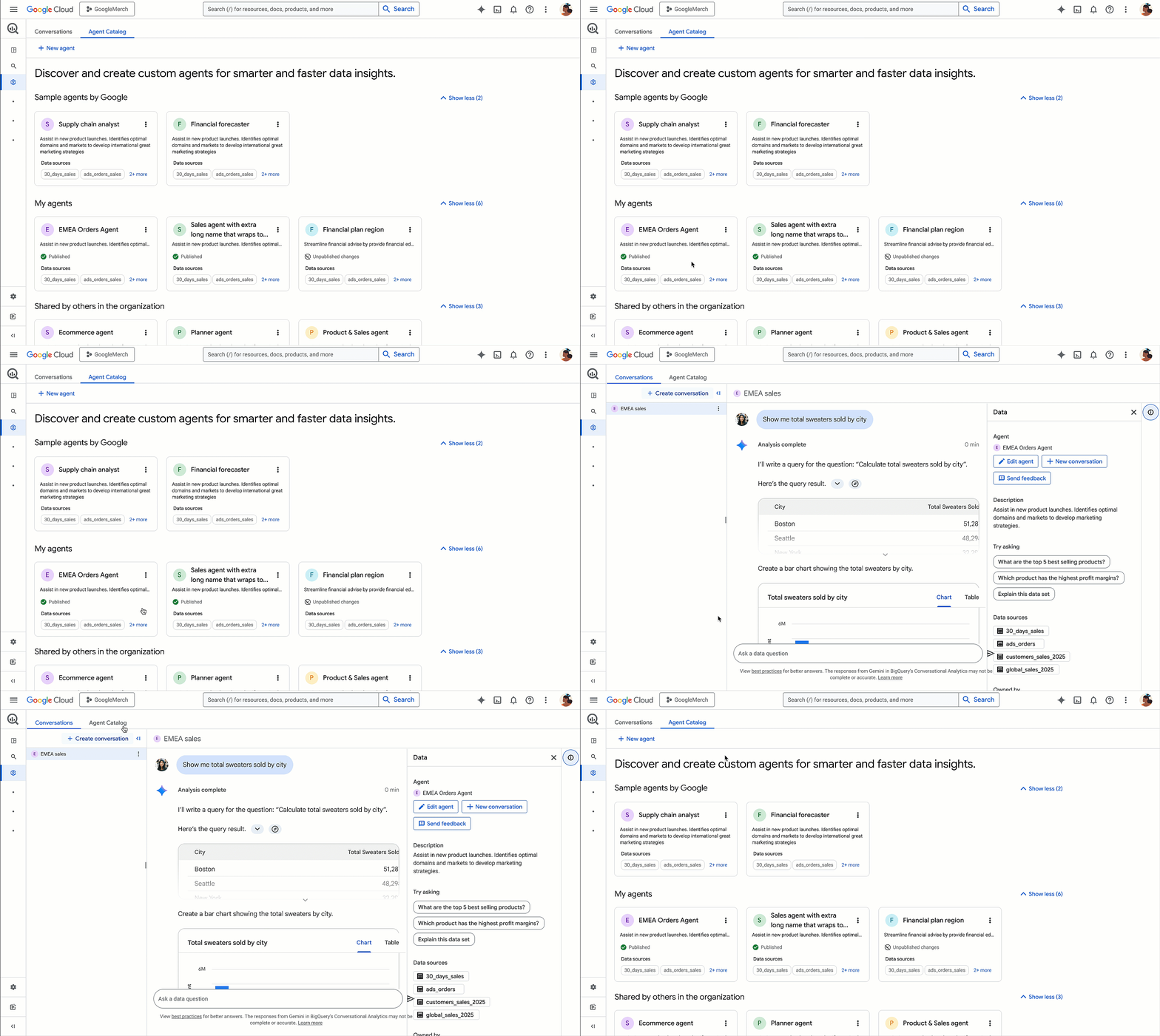
The rise of AI agents is fundamentally disrupting applications and analytical systems. Generic AI platforms don't usually have access to the context stored within enterprise databases. This is because traditional data architectures often lack context for agents across the data estate, which can lead to agents being inaccurate. They’re also prone to security gaps due to a lack of granular…
Welcome to the first Cloud CISO Perspectives for June 2026. Today, we introduce Chris Betz as the new CISO of Google Cloud. For his first Cloud CISO Perspectives, Chris shares four key lessons we learned about using AI to the defender’s advantage while building AI Threat Defense. As with all Cloud CISO Perspectives, the contents of this newsletter are posted…

As enterprises adopt agentic AI, they need to shift from reactive systems of intelligence to proactive systems of action to equip the agents they’re building with the context and performance they need, plus regulator-grade accountability, where every decision is explainable and auditable. At Google Cloud Next ‘26, we discuss how our Agentic Data Cloud enables a system of action, and…

Written by: Patrick Whitsell, John McGuiness Google Threat Intelligence Group (GTIG) has identified a sophisticated campaign attributed to UNC6508, a People's Republic of China (PRC)-nexus threat actor, targeting institutions in the North American academic, medical, and military research community. While remaining undetected for over a year, the threat actor compromised externally facing web applications, deployed bespoke malware, pivoted to sensitive…

I have been exploring how to reclaim my software stack from NPM dependency overhead and replace my resource-intensive Node.js runtime with a compiled, single-binary Go CLI. The result of my efforts is skl, a fast tool we use for managing Agent Skills, that launches in 2ms and uses only 11MB of memory. But how exactly did I do it? Simply,…
12 Jun
As foundation models continue to improve, the lack of relevant context often limits what they can do, especially as they are used to build agentic systems. While these models can help you write code, summarize documents, or analyze a dataset, they still need the right information to produce accurate and actionable results. That’s why today, we’re introducing the Open Knowledge…
11 Jun
At Google Cloud, we’re committed to providing the most advanced, secure, and private infrastructure for the most demanding AI workloads, and partnering with a broad and diverse range of organizations to help them meet their AI workload needs. We are thrilled to collaborate with Apple on its expanded Private Cloud Compute (PCC) systems announced this week at WWDC 2026. Working…
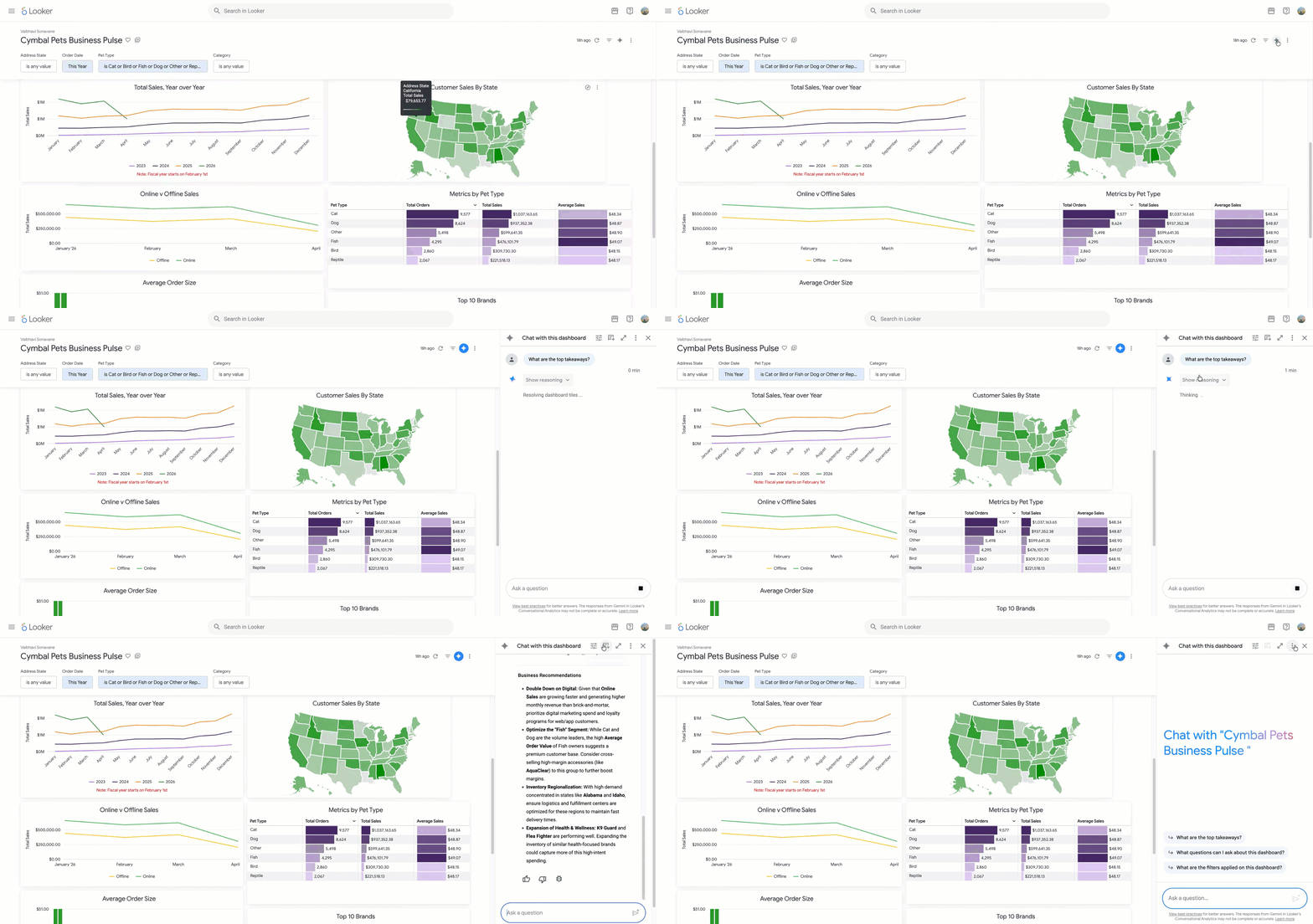
Dashboards have long served as a primary way for organizations to extract insights from data, but they can fall short in agile environments: Dashboards aren’t interactive and don’t allow you to ask follow-up questions. This forces users to step outside their workflows or turn to data analysts to get the answers they need. Today, we are introducing Looker dashboard agents…

Introduction Mandiant and Google Threat Intelligence Group (GTIG) have identified an active compromise and extortion campaign attributed to UNC6240 (ShinyHunters) targeting Oracle PeopleSoft application infrastructure. The activity was observed between May 27, 2026, and June 9, 2026 and is consistent with the exploitation of CVE-2026-35273, a critical remote code execution vulnerability (CVSS 9.8) in the Environment Management component. The exploitation…

Look at any builder's prompt history and you'll see a collection of highly specific, sometimes chaotic, one-off prompts. We use AI to debug a single error message, refactor a messy email, or generate a quick boilerplate. If you sit down with people who consistently ship high-quality work, you'll find something interesting. They aren't just improvising. They have a set of…
10 Jun

From foundational ETL and analytics to the frontier of generative AI, Apache Spark serves as the architectural backbone for global data processing. However, as data volumes scale, the trade-off between performance and infrastructure costs can be a limiting factor for growth. In the agentic era, where autonomous agents can trigger thousands of concurrent, multi-hop queries, this performance bottleneck directly dictates…

TL;DR: Antigravity 2.0: A desktop app to orchestrate multiple autonomous agents working in parallel across independent projects. Antigravity CLI: A terminal interface designed for command-line workflows and headless execution. Antigravity IDE: An editor for developers who want to write code directly alongside an agent. Antigravity SDK: A Python library for building and deploying your own custom agents that use the…
9 Jun
Claude Fable 5, Anthropic’s latest frontier model, is now generally available on Google Cloud. This launch is the latest proof point of our ongoing commitment to bring the industry's latest models straight to our Agent Platform. Claude Fable 5 brings the best of Anthropic model capabilities to all customers, with strong safeguards designed to make it safe for general use.…

The public sector has reached a critical inflection point. For years, organizations have explored what’s possible through isolated AI pilots and experimentation. Today, the question has shifted to “what creates impact?” where the focus is no longer on hypotheticals, but on achieving real productivity gains, improving services and outcomes, and advancing your mission - right now. Meeting this moment requires…
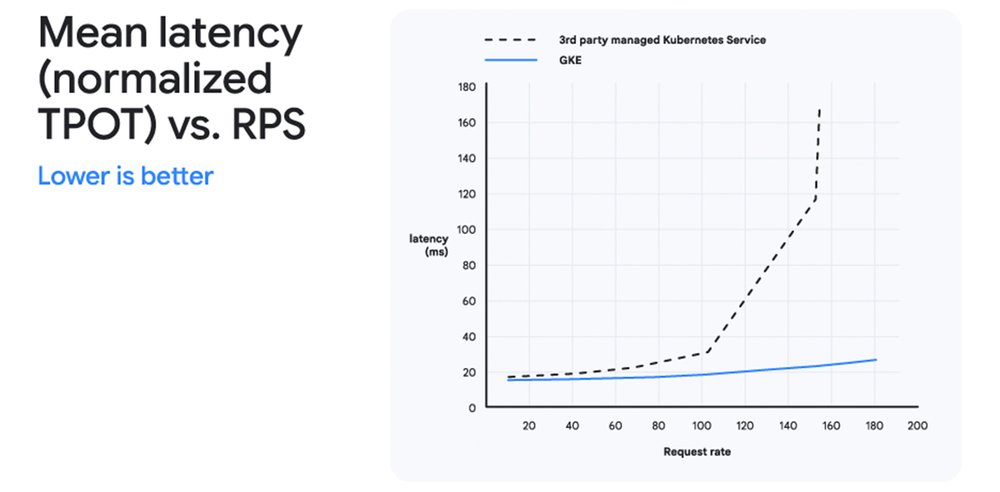
As generative AI moves from experimental pilots to massive production environments, the efficiency of your infrastructure becomes the ultimate differentiator. One way to get the most out of it and minimize costly accelerator idle time is to leverage the Google Kubernetes Engine (GKE) Inference Gateway, which intelligently routes generative AI workloads based on real-time model server metrics. Instead of relying…

As enterprise storage footprints scale to billions of objects, AI applications and agentic workloads are fundamentally shifting the role of storage from a passive repository to the foundation of the data platform. This is driven by a surge in unstructured model data and the billions of actions performed on those objects, including session logs and audit trails. To manage this…

How do you prove the business value of generative AI to your teams? Technology and finance leaders need to show the clear business value of AI projects to secure ongoing funding. While measuring return on investment (ROI) is a key part of validating your technical strategy, long-term success ultimately depends on building the organizational systems and culture needed to make…

To defend against the growing range of AI-accelerated threat actors, organizations need to be able to respond faster to outpace the adversary. Recently, we announced Google AI Threat Defense, an automated security system designed to help you continuously monitor for and stop AI-powered threats before they can impact your business. Based on Google’s own approach to today’s threats and vulnerability…
8 Jun

In clinical informatics, every second counts. For Alcidion, a global leader in smart health solutions, the mission is simple but critical: use technology to reduce cognitive load for clinicians and present the right information at the right time to save lives. Whether it’s managing patient flow in an emergency department or ensuring a patient is in the correct ward to…
5 Jun

Want to know the latest from Google Cloud? Find it here in one handy location. Check back regularly for our newest updates, announcements, resources, events, learning opportunities, and more. Tip: Not sure where to find what you’re looking for on the Google Cloud blog? Start here: Google Cloud blog 101: Full list of topics, links, and resources. aside_block <ListValue: []>…

Written by: Chad Reams, Tufail Ahmed, Keith Knapp, Ashley Frazer, Tyler McLellan Introduction From January through May 2026, Mandiant identified a financially motivated data theft extortion campaign executed by the threat cluster UNC3753 (also tracked as "Luna Moth," “Chatty Spider,” and "Silent Ransom Group") targeting dozens of organizations across professional, legal, and financial services in the United States. UNC3753 leverages…
4 Jun

At Google Cloud, our goal is to let you run large-scale analytical and data science workloads with maximum efficiency so you can process big data pipelines, machine learning, and ETL tasks. We recently announced that the Dataproc service is now Managed Service for Apache Spark, reflecting our deep integration with the Agentic Data Cloud. To support the diverse architectural needs…
June 1 - June 5 Beyond the Query: Powering AI Agents with Bigtable, Firestore & Memorystore Discover the latest advancements in Google Cloud's NoSQL Database portfolio, including Bigtable, Firestore, and Memorystore. This series is designed for a broad audience: whether you are exploring these databases for the first time or are an existing user looking to leverage the new capabilities…
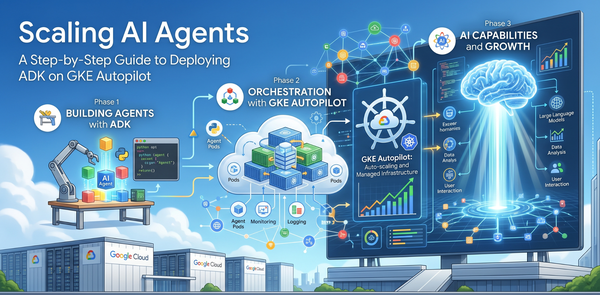
While building AI agents locally using Google’s Agent Development Kit (ADK) is an excellent way to prototype, production-ready agents require a robust, scalable infrastructure. For developers looking to move beyond simple instances and into the world of managed container orchestration, Google Kubernetes Engine (GKE) Autopilot offers the perfect balance of flexibility and ease of use. In this tutorial, I will…
3 Jun
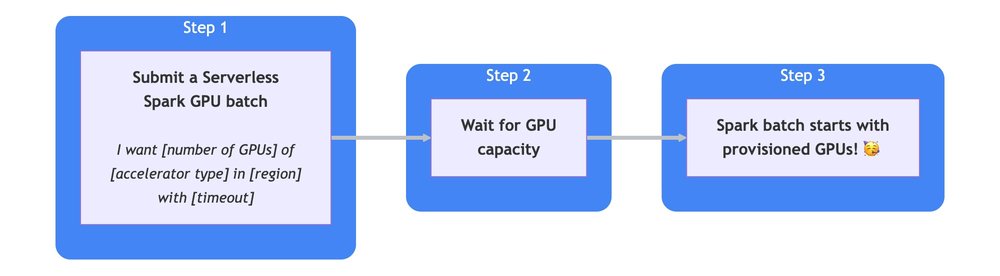
Whether you use it for data preparation, real-time interactive queries, AI model training, or something entirely different, running Apache Spark at scale is demanding — you shouldn’t have to manage the underlying infrastructure too. Late last year, we announced the general availability (GA) of our serverless Managed Service for Apache Spark runtime version 3.0, prioritizing speed, simplicity, and reliability. Since…
2 Jun
Google Cloud Storage (GCS) is a foundational component of the modern agentic tech stack and the preferred home for unstructured data at scale. As enterprises deploy agents in production, the critical focus has shifted to turning data into context and building secure, standardized integrations to access context. This is the core of smart storage: making unstructured data inherently agent-ready by…
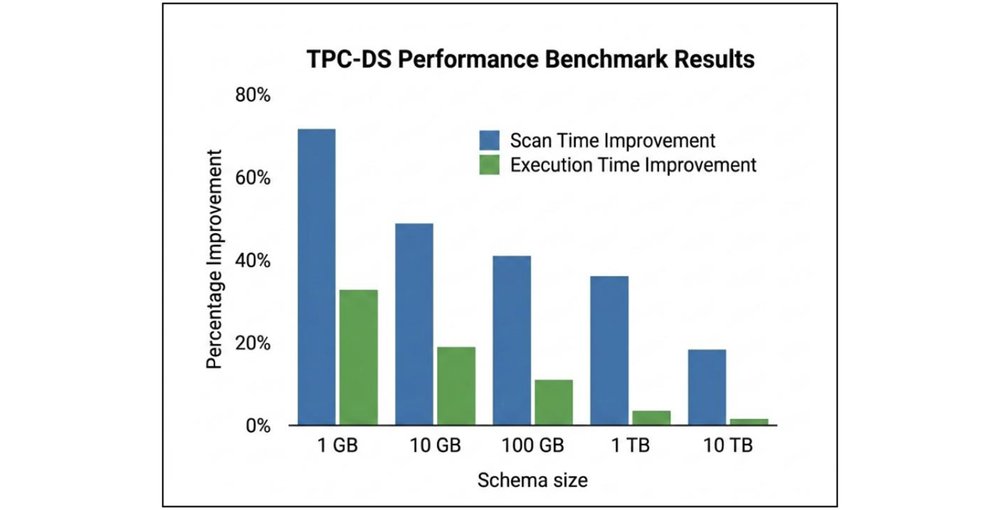
Many data engineers spend significant time managing compatibility and getting best performance across multiple analytics engines. To help solve this pain point, we are excited to announce gcs-analytics-core, a new open-source Java library designed to centralize and accelerate analytics optimizations for Google Cloud Storage (GCS). With this, you get the flexibility to select your preferred analytics engine while achieving high…

At Google Cloud Next, we announced the preview of graph algorithms with Spanner Graph, bringing Google Research’s state-of-the-art graph mining capabilities natively to your database. These graph intelligence capabilities can help you derive valuable insights from graph data faster, cheaper, and at scale. Enterprises are increasingly leveraging graph technologies to uncover complex relationships in data for use cases such as…

What happens when your workload fails in one region but you need access to service? This is a common case for availability and uptime. With recent enhancement to the Kubernetes ecosystem and capabilities like Dynamic Resource Allocation (DRA) and Inference Gateway. I decided to experiment with these capabilities in Google Cloud for a simple test using an AI inference workload.…