
Wave Function Collapse is an algorithm that generates structured randomness. There are plenty of reasons to want structured randomness. Maybe you want to create a randomized world map, with rivers coming out of lakes, and mountains ranges gradually sloping, like in Minecraft. Or maybe you want to create randomized towns, with the layout of the […] The post Introduction to…
#algorithms
6 posts
21 May
30 Apr

Author: Alain Rakotomamonjy From ideation to outcome, this is the story of a privacy-preserving research project. It tells how research can generate innovations but also joy and despair. Early 2024: The “Hammer” Phase Two research leads who pioneered Criteo’s early privacy initiatives, as part of the Criteo multi-year research program, introduced me to a challenge born from the Privacy Sandbox…
28 Jul 2021
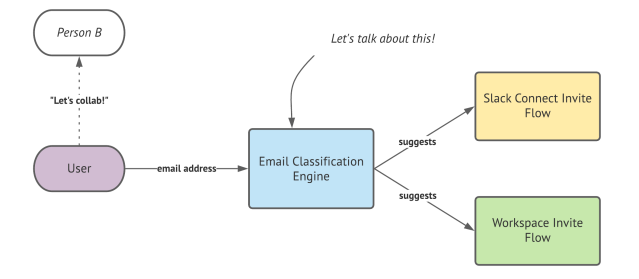
With the release of Slack Connect, people can now collaborate both with internal employees and external organizations in the same channel. To make this as smooth as possible, Slack does predictive email analysis to classify and recommend the best way for a user to work with people they want to collaborate with. To accomplish this,…
27 Oct 2019

I really enjoyed Classic Computer Science Problems in Python by David Kopec. It covers many different problems I hadn’t read detailed explanations of before. For example: neural networks, constraint-satisfaction problems, genetic algorithms and the minimax algorithm. Unlike many other books … Continue reading →
18 Feb 2013
I recently finished the Coursera course Algorithms: Design and Analysis, Part 2 by Professor Tim Roughgarden of Stanford. I’ve already reviewed part 1, and here are my thoughts on the second part. The main theme of part 1 was the divide … Continue reading →
8 May 2012
I recently finnished the Coursera course Design and Analysis of Algorithms I, given by Professor Tim Roughgarden of Stanford. This was my second on-line course from Coursera (last fall I took Introduction to Databases, which I wrote about here), and … Continue reading →