
As the automotive landscape accelerates toward software-defined vehicles, Cockpit Domain Controllers (CDCs) are becoming the core of next-generation in-cabin experiences. The ability to rapidly develop, test, and validate CDC software in a flexible, hardware-independent environment is critical for innovation and time-to-market. However, physical hardware constraints and the requirement for high-performance graphics present significant challenges for global development teams. Panasonic Automotive
#compute
13 posts
20 Jul
16 Jul
Have you run into problems migrating your products from one model to the next? Upgrading to the latest AI models is rarely simple. For engineering teams, model updates whether migrating to an entirely new model or updating to a newer checkpoint within the same model family, like moving from an earlier Gemini version to Gemini 3.5 — often require a…
8 Jul

C4N, now GA: Delivering cloud’s highest per vCPU network and block storage I/O for x86 workloads
Google CloudAs organizations scale modern workloads — from high-throughput databases and network/security appliances to real-time analytics and AI/ML inference — network and block storage performance can quickly become a bottleneck. Standard virtual machines often struggle to balance compute efficiency with the high-volume data-transfer demands of these applications. At Google Cloud Next ‘26, we announced C4N in preview, our first network- and…

In the agentic era, AI is evolving from answering questions to reasoning and taking action. Companies who want to lead in this next phase of AI need computing infrastructure that’s designed and optimized for these new requirements, helping them innovate faster, deliver compelling user and customer experiences, and optimize for cost and energy efficiency — all at massive scale. Today,…
7 Jul

Report: 83% of organizations need to upgrade their infrastructure to support agentic AI
Google CloudFor years, enterprise AI has been synonymous with conversational AI — the customer service bots and digital assistants we interact with every day. But today, the market has shifted. We’ve officially moved from moving from AI that answers through simple chats, to AI that takes action, automated workflows, and executes complex tasks on its own. While this unlocks entirely new…
1 Jul
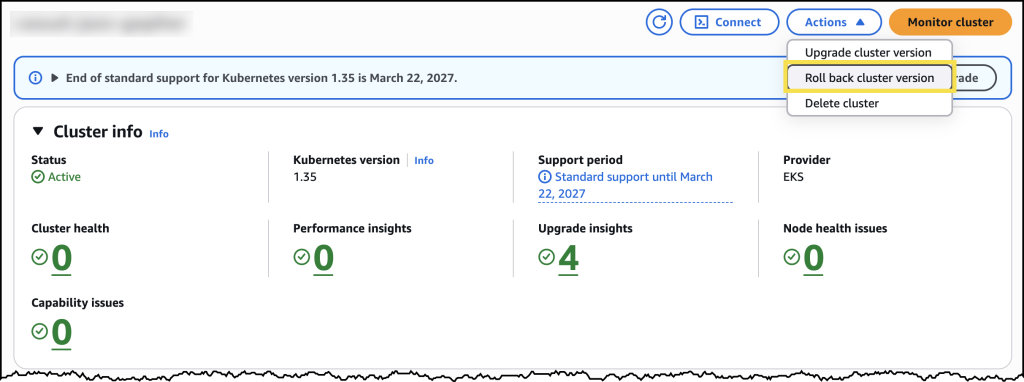
Learn how Kubernetes version rollbacks for Amazon EKS let you reverse cluster upgrades within seven days. This new feature provides a safety net for upgrade failures—no cluster rebuilds required—turning Kubernetes version upgrades into a reversible, low-risk operation.
23 Jun

Protecting sensitive data used with AI is a critical part of our commitment to providing advanced and secure cloud infrastructure. Confidential Computing cryptographically protects data in use in hardware-based Trusted Execution Environments (TEEs) with verifiable data integrity. We are thrilled to share our latest Confidential Computing innovations across our hardware ecosystem that help further strengthen verifiable privacy in cloud AI…
22 Jun

AWS launches a new serverless compute primitive, AWS Lambda MicroVMs. VM-level, isolated sandboxes with no shared kernel or resources between sessions. Rapid launch and resume, full lifecycle control, state preservation up to 8 hours, no infrastructure to manage.
18 Jun
Announcing Amazon EC2 G7 instances accelerated by NVIDIA RTX PRO 4500 Blackwell Server Edition GPUs
AWSAnnouncing the general availability of Amazon Elastic Compute Cloud (Amazon EC2) G7 instances, delivering high performance GPU acceleration for AI inference, graphics, and data analytics workloads.
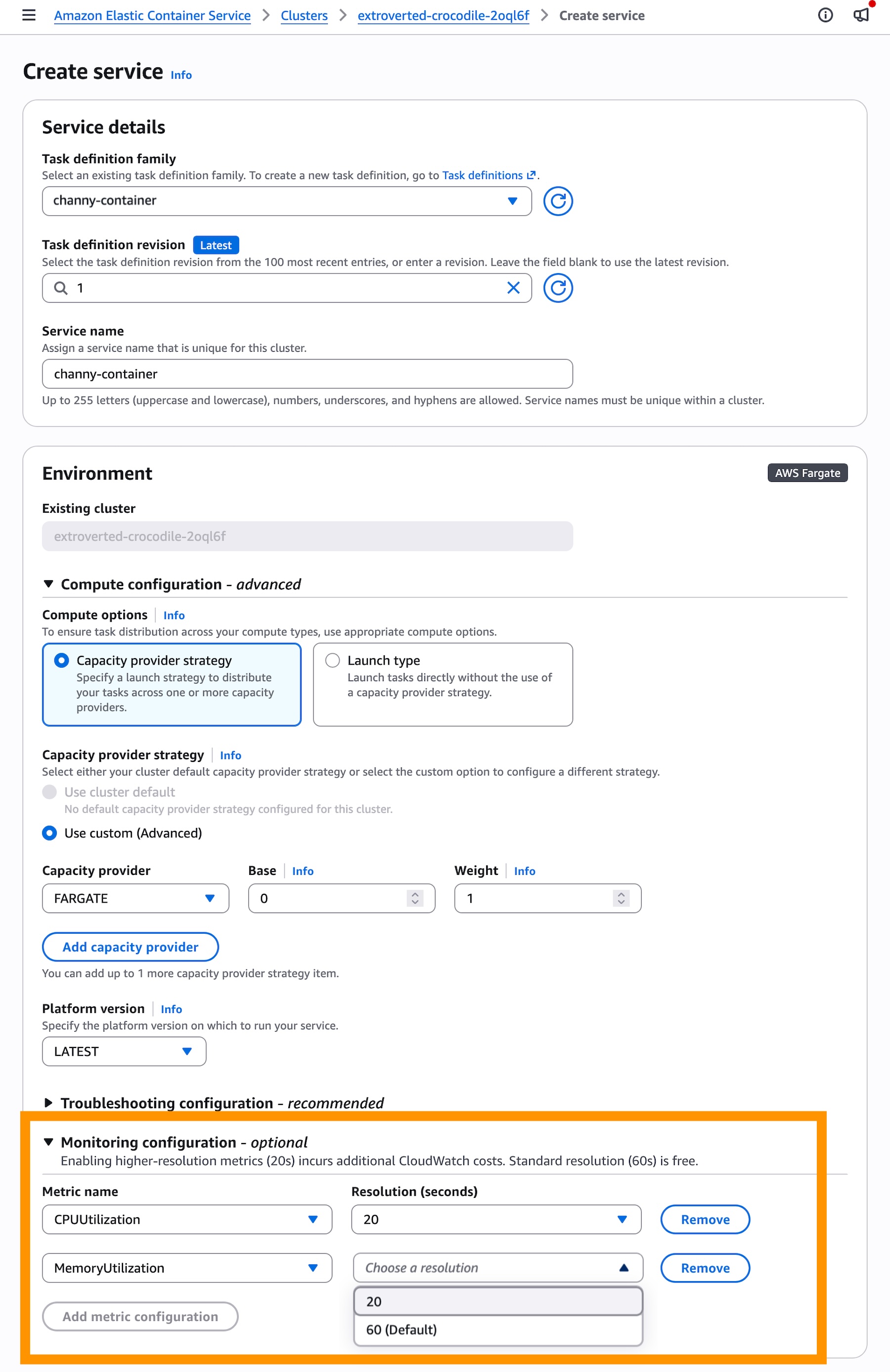
Amazon Elastic Container Service (Amazon ECS) service auto scaling automatically adjusts task counts to meet workload demand with comprehensive scaling policies, including predictive scaling for recurring traffic patterns, scheduled scaling for planned events, and target tracking to scale dynamically on real-time metrics. You can choose proactive scaling by using predictive scaling (automatic) and scheduled scaling […]
10 Jun
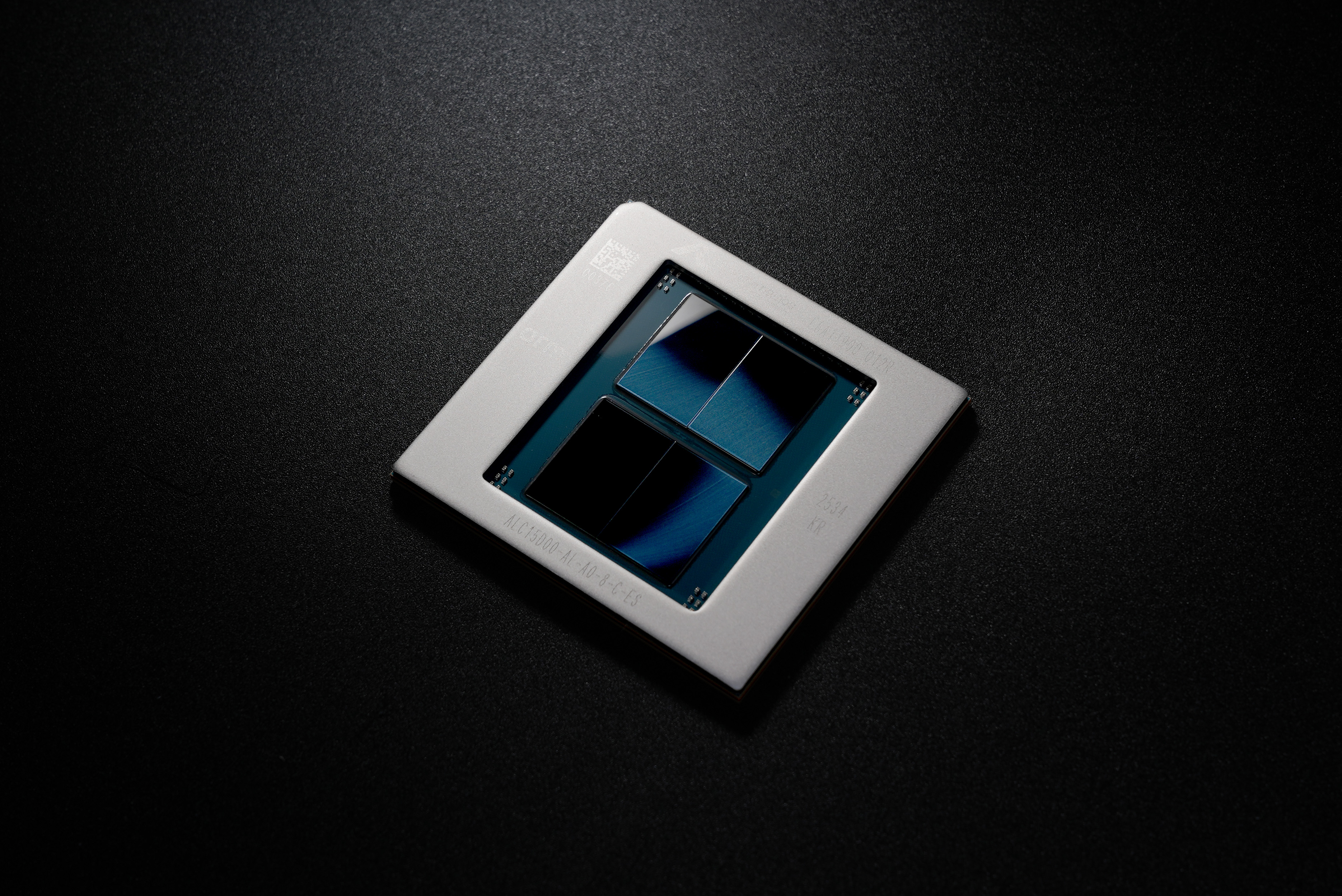
AWS launches Amazon EC2 M9g and M9gd instances, powered by AWS Graviton5 processors. AWS Graviton5 is most powerful, and most energy efficient processor AWS has ever built, and offers up to 25% better compute performance compared to Graviton4-based instances.
19 May

How ALS GeoAnalytics LITHOLENS ™ revolutionizes core logging through machine learning with Amazon EKS
AWS ArchitectureThis post explores how ALS GeoAnalytics successfully deployed LITHOLENS ™ with Amazon Elastic Kubernetes Service (Amazon EKS) to scale model training and inference while minimizing cost.
12 May
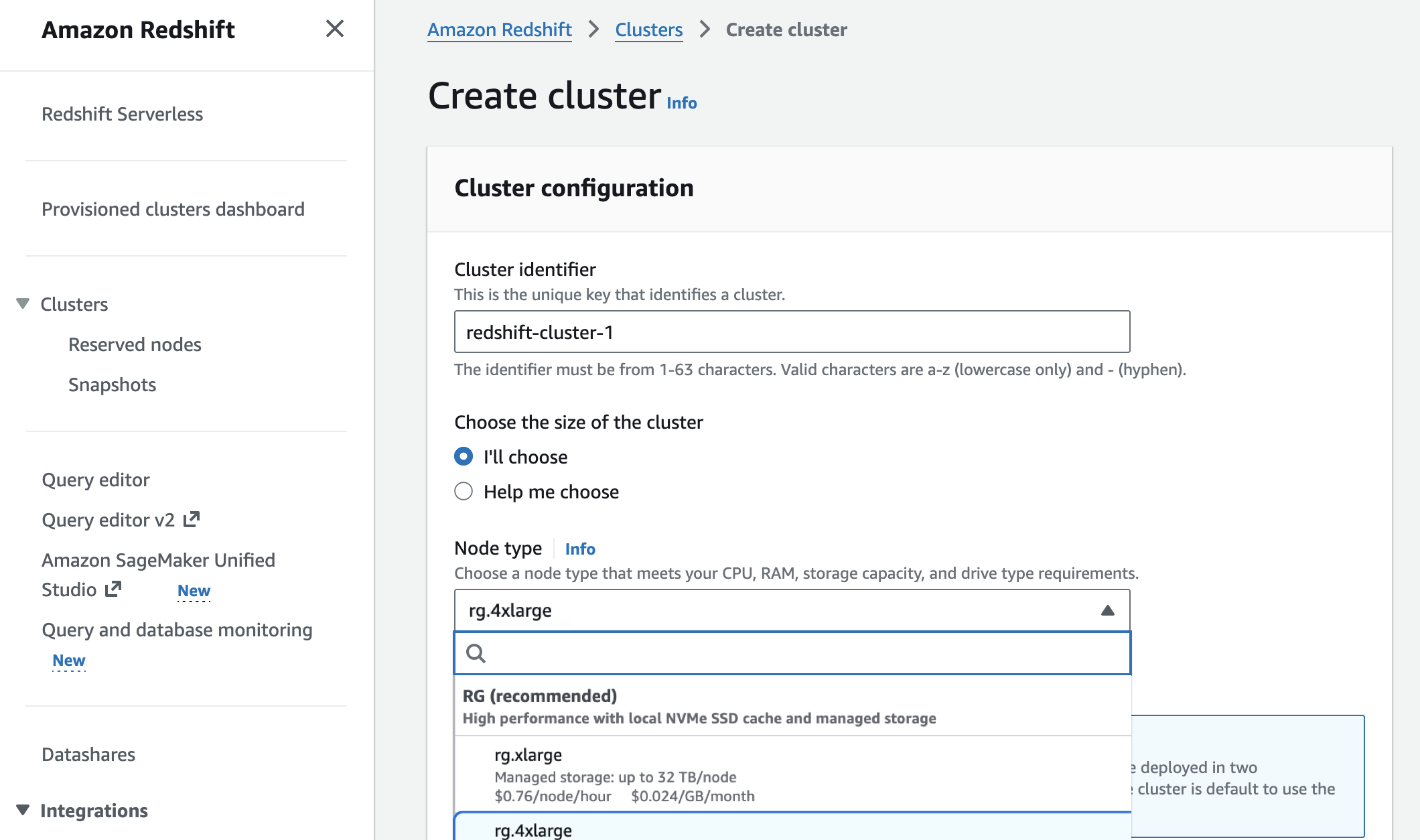
Amazon Redshift introduces AWS Graviton-based RG instances with an integrated data lake query engine
AWSAmazon Redshift RG instances, powered by AWS Graviton, run data warehouse and data lake workloads up to 2.4x as fast as RA3 instances at 30% lower price per vCPU. Its integrated data lake query engine supports open table formats such as Apache Iceberg.