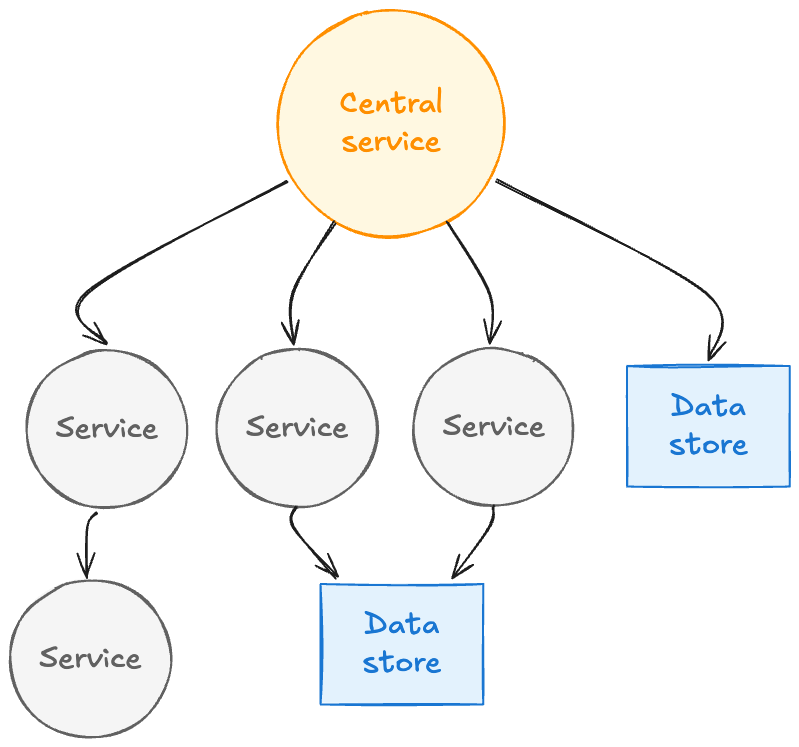
By Parth Jain , Rakesh Sukumar , Yingwu Zhao , Renzo Sanchez & Nathan Fisher How we built a living map of our distributed infrastructure to help engineers understand dependencies, troubleshoot faster, and keep Netflix running smoothly for our members around the world. The Puzzle with a Thousand Pieces Picture this: It’s 3am, and an engineer gets paged. One of…
#microservices
18 posts
29 May
2 Dec 2025
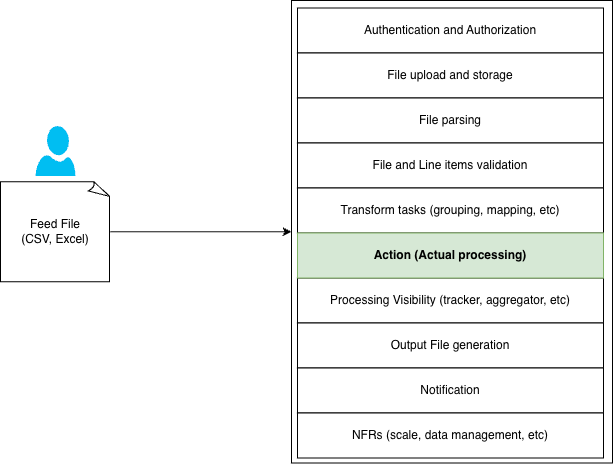
Context and Motivation: The Prevalence of Bulk Actions Feed file processing is a core capability required in a company like Flipkart, enabling the application of thousands, or even millions, of entity changes through a single file upload. It’s about handling massive bulk data processing , the ability to apply changes to thousands, or even millions, of entities through a single…
14 Apr 2023

The Jobteaser application contains a lot of different relatively independent modules to help universities provide career guidance to students: a job board, a career event management system, a career advice appointment management system… When we decided to migrate our application’s backend from a monolith to a service-oriented architecture, we strived to keep each module as isolated as possible from the…
7 Apr 2023
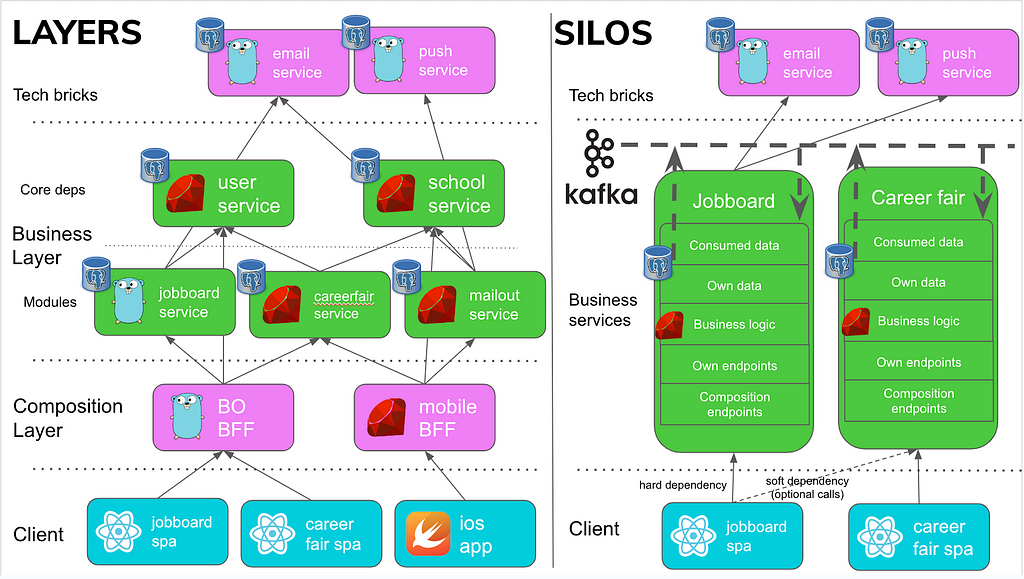
When it comes to the communication between microservices, there are 2 possible extremes: All-sync: whenever a service needs data from another service, it fetches it via a synchronous API call (REST, gRPC, GraphQL). Service calls service calls service… which tends to evolve into layers of APIs, where each layer has dependencies on the next. All-async: no sync calls between services,…
31 Mar 2023
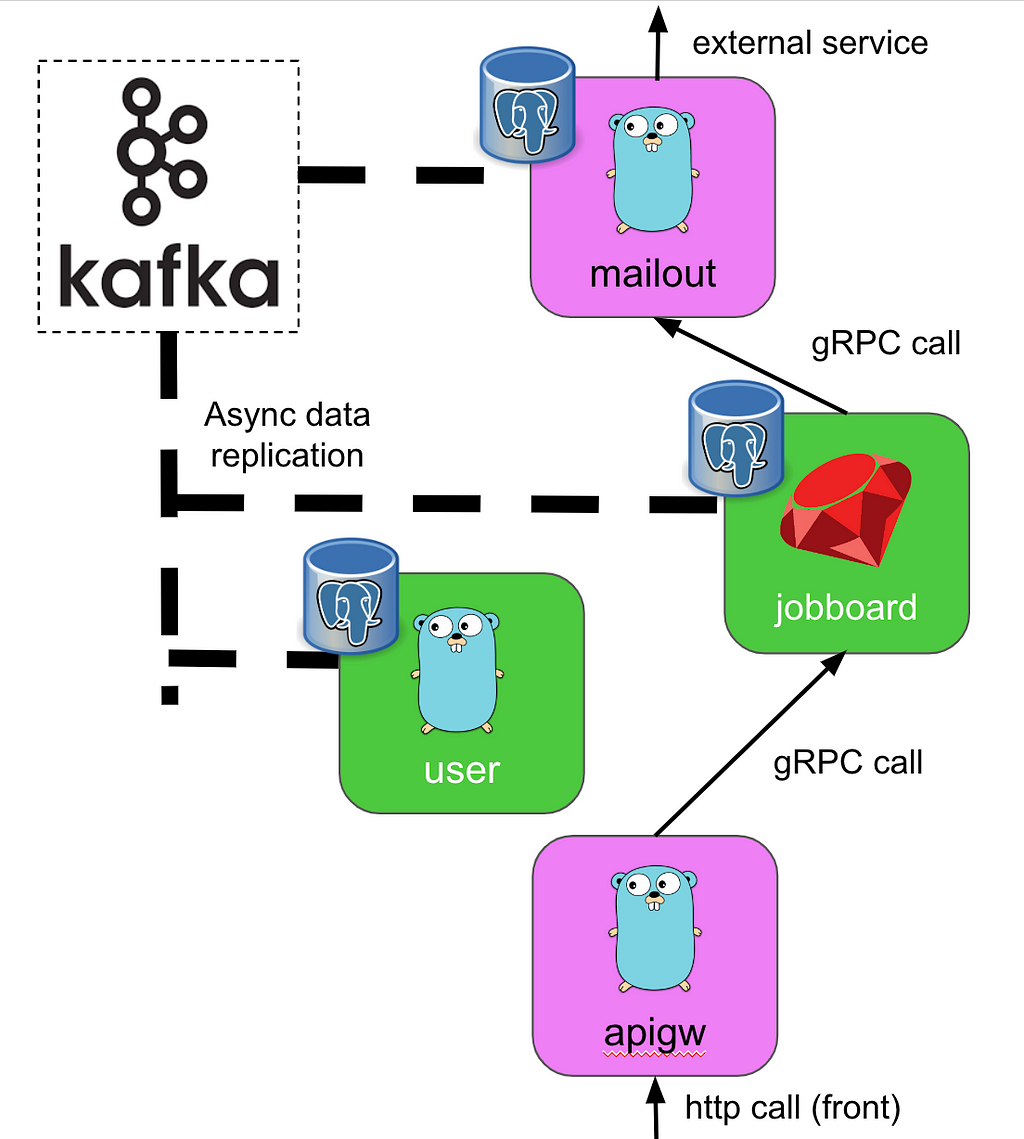
This is an introduction to how we’ve implemented microservices at a mid-size scale-up called Jobteaser , with a mix of Go and Ruby service chassis, gRPC APIs and data replication via Kafka. Foundation: The service chassis Back in early 2019, when Jobteaser decided to get serious about breaking up its decade-old Rails monolith into microservices, we assembled a Foundation team…
1 Nov 2022
My name is Avery Dunn and I am a rising master’s student at Washington University in St. Louis studying computer science. For the past 12 weeks, I have been a software engineering intern on the API & Platform pod of the Foundation team. I am an active Strava user and have been for approximately 3 years with my favorite activity…
14 Mar 2022
This is the story of how we used the Strangler pattern to migrate our public API from a monolithic codebase to a fully fledged BFF over the…
17 Sept 2021
This article is the last part in a series of posts aiming to cast some light onto how service architecture has evolved at SoundCloud over…
20 Aug 2021
This article is part of a series of posts aiming to cast some light onto how service architecture has evolved at SoundCloud over the past…
29 Jul 2021
This article is part of a series of posts aiming to cast some light onto how service architecture has evolved at SoundCloud over the past…
24 May 2021

Microservices have gone through a complete hype cycle. From being hailed as the one true way to build systems, to a backlash where they are often considered too difficult and complex. In a way though, they are like most technology … Continue reading →
19 Sept 2018
SoundCloud is built on hundreds of microservices. This creates many challenges, among them debugging latency issues across the services…
7 Dec 2017
A little less than two years ago, SoundCloud began the journey of replacing our homegrown deployment platform, Bazooka, with Kubernetes. Kubernetes automates deployment, scaling, and management of containerized applications.
11 Aug 2017
28 Jul 2017
If you’re a regular visitor to this blog, you might be aware that we have been transitioning to a microservices based architecture over the past four to five years, as we have shared insights into the process and the related challenges on multiple occasions. To recap, adopting a microservices architecture has allowed us to regain team autonomy by breaking up…
7 Dec 2016
Building and operating services distributed across a network is hard. Failures are inevitable. The way forward is having resiliency as a key part of design decisions. This post talks about two key aspects of resiliency when doing RPC at scale - the circuit breaker pattern, and its power combined with client-side load balancing.
26 Aug 2016
In a previous series of blog posts, we covered our decision to move away from a monolithic architecture, replacing it with microservices, interacting synchronously with each other over HTTP, and asynchronously using events. In this post, we review our progress toward this goal, and talk about the conditions and strategy required to decommission our monolith.
27 Jul 2016
Since we started breaking our monolith and introduced a microservices architecture we rely a lot on synchronous request-response style communication. In this blog post we’ll go over our current status and some of the lessons we learned.