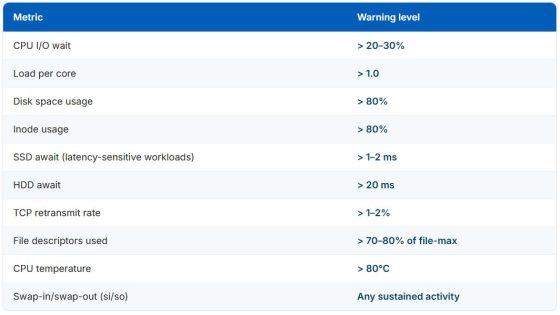
Servers give you warnings before they fail. Most sysadmins performing Linux server monitoring miss them because they're watching the wrong numbers. The metrics that actually matter are one level deeper: iowait instead of CPU percentage, active swap paging instead of memory usage, inode counts instead of just disk space. Continue reading...
#server
17 posts
6 Jul
22 Jun
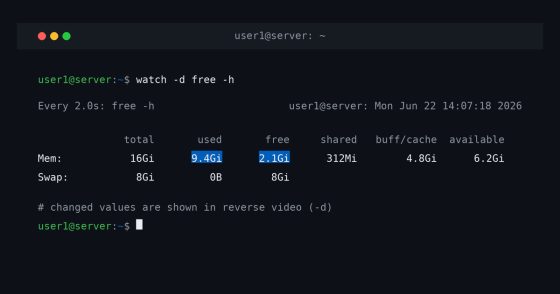
The watch command runs any Linux command repeatedly at a set interval and displays the output full-screen, making it one of the quickest ways to monitor live system activity without writing a script. This guide covers all the key options with practical examples for real sysadmin use cases. Continue reading...
11 Jun
I’ll admit, I hesitated a bit before writing this post. The whole point of this linuxblog.io and linuxcommunity.io forum is to bring together like-minded Linux users and professionals so we can troubleshoot, share ideas, and learn from one another. Continue reading...
8 Jun
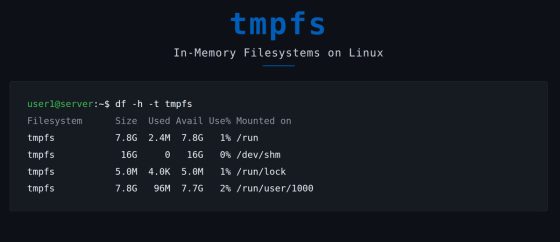
tmpfs lets you mount a filesystem entirely in RAM. Here is how Linux already uses it, how to create your own mounts, and where it actually makes sense to use one. Continue reading...
6 Jun
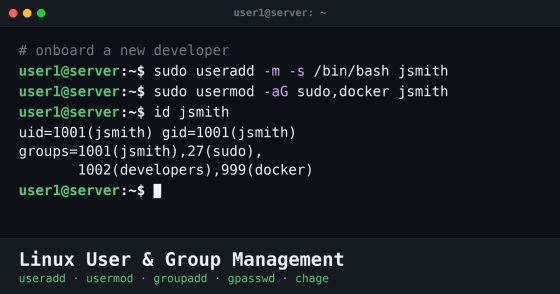
A practical guide to Linux user and group management using useradd, usermod, userdel, groupadd, gpasswd, and chage. Covers real-world examples, common mistakes, service accounts, and safe account removal. Continue reading...
1 Jun
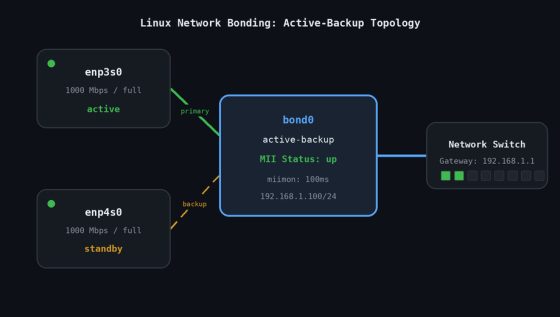
Two network interfaces are better than one. With Linux network bonding (also known as NIC bonding or link aggregation), you can combine multiple NICs into a single logical interface, gaining either increased throughput, failover redundancy, or both. Continue reading...
28 May
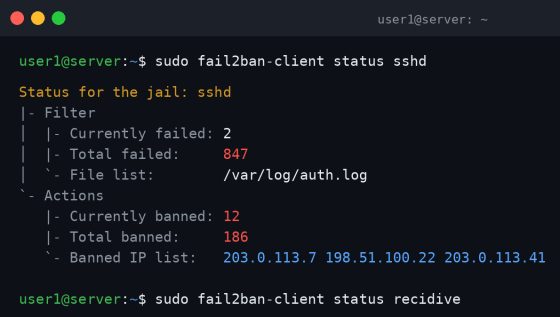
Fail2ban watches your log files and automatically bans IPs that repeatedly fail authentication, protecting your Linux server from brute-force attacks on SSH, web servers, and more. This guide covers installation, jail configuration, testing, and practical tuning to get real protection instead of just running defaults. Continue reading...
24 May
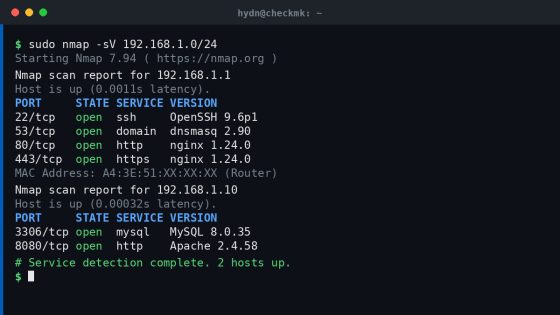
A practical guide to nmap on Linux covering host discovery, port and service scanning, OS detection, NSE scripts, output formats, and real-world command combinations sysadmins actually use. Continue reading...
21 May
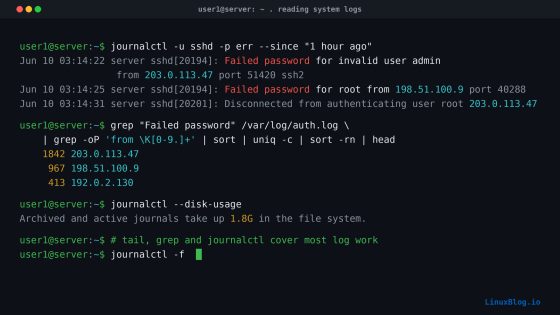
A practical guide to Linux log files: where they live, how to read and search them with tail, grep, and journalctl, how to manage log rotation, and a real-world troubleshooting workflow. Continue reading...
3 May
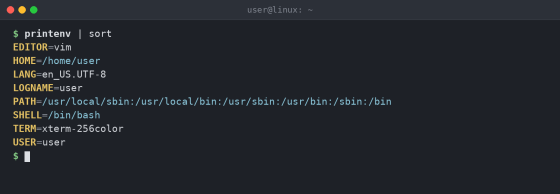
A practical guide to Linux environment variables: how to set, export, persist, and debug them correctly across shell sessions, user accounts, system-wide configs, and systemd services. Continue reading...
22 Apr
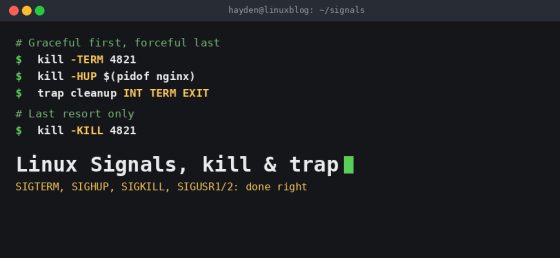
A practical guide to Linux signals: how to use kill, pkill, and trap correctly to manage processes, reload configs, and write scripts that clean up gracefully instead of dying mid-operation. Continue reading...
27 Jun 2022

The Raspberry Pi is a low cost device and it consumes low power. It can be used as a web server with your home internet and you will have complete freedom to implement ideas. Nowadays popular cloud services are costing high for the same specifications and recently banned some websites for showing some legal terms. This post will guide you…
25 Oct 2015

This tutorial explains how to use Gulp and vinyl-ftp to watch local files for changes and automatically upload updates to a website via FTP. Useful for quickly editing legacy sites only accessible through FTP.
8 Sept 2015

This blog post provides a beginner's guide to managing versioning and deployment of static websites using Git for version control, Flightplan.js for automated deployment, and Nginx for serving. It outlines a simple yet complete workflow for implementing continuous delivery and rollbacks.
29 Jun 2014

By writing a Dockerfile we can containerize a simple Go echo server app. The Dockerfile installs Go, copies the server code, exposes the port, and defines the command to run the app. Building the Dockerfile produces an image that can be run as a container. The containerized Go app can then be easily distributed and run anywhere Docker is installed.
30 Mar 2014
Learn how to reset a lost MySQL root password by restarting the server with disabled security checks. This allows resetting the password directly in the database. Useful when locked out but reduces security temporarily.
17 Jan 2014

This post explains how to install Dropbox command line client on a Linux server, create a dedicated user and setup it as a service to have automated backups on Dropbox cloud.